A dryer that vents out through the wall has it easy. The lint travels a few feet, hits fresh air and is gone. A dryer that vents out through the roof has a much harder job. The lint has to climb the whole run, up through the attic and out a cap on the roof, and every bend and every foot of rise is a place for it to settle. On this home in Sugar Land, in the 77479 ZIP, most of that lint had settled at the top.
What We Found on the Roof
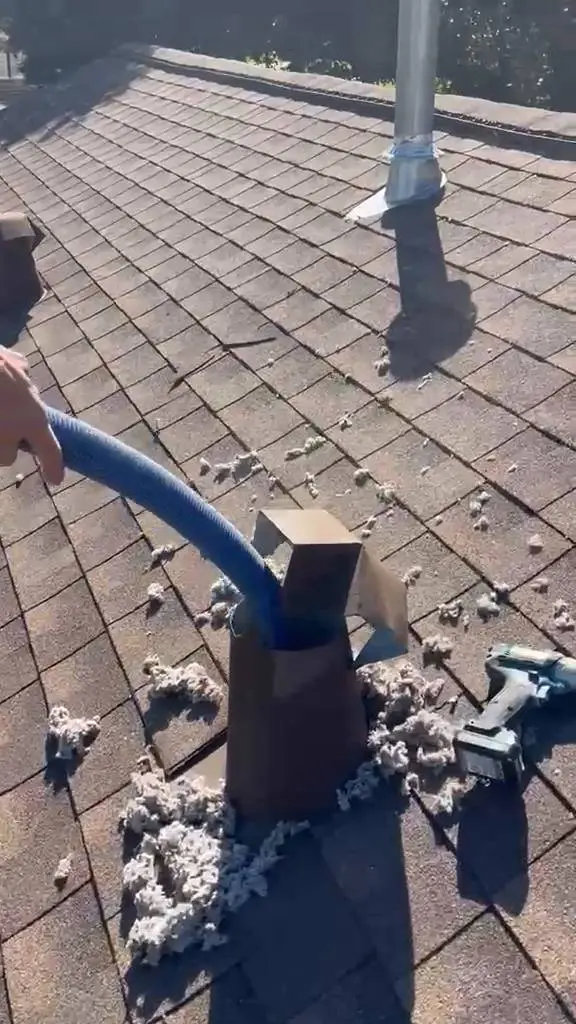
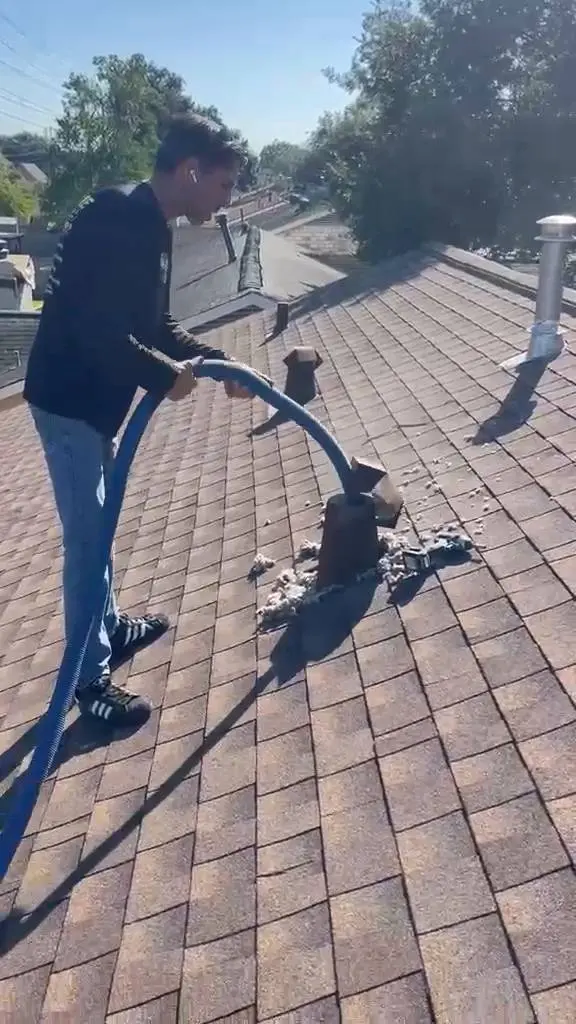
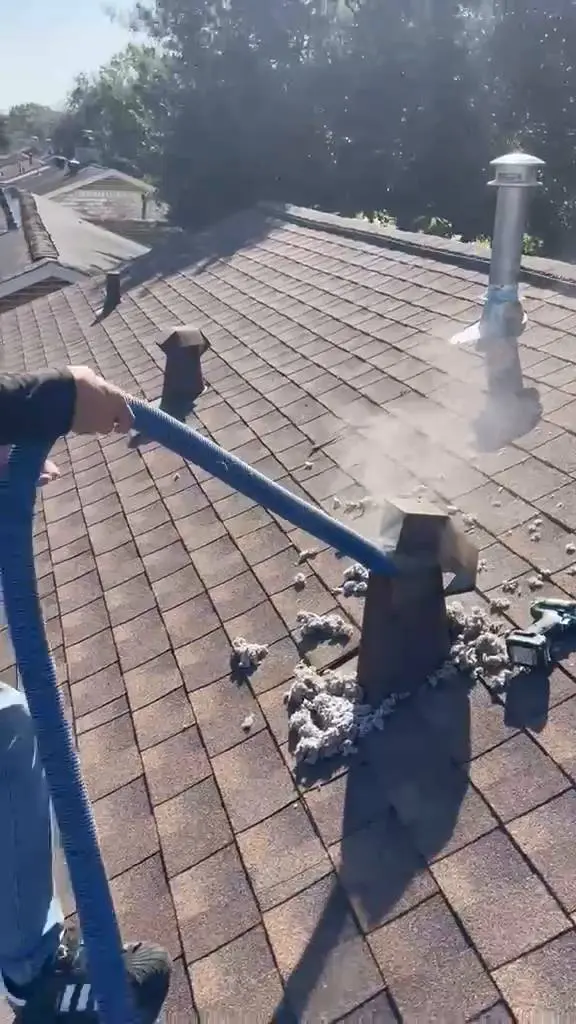
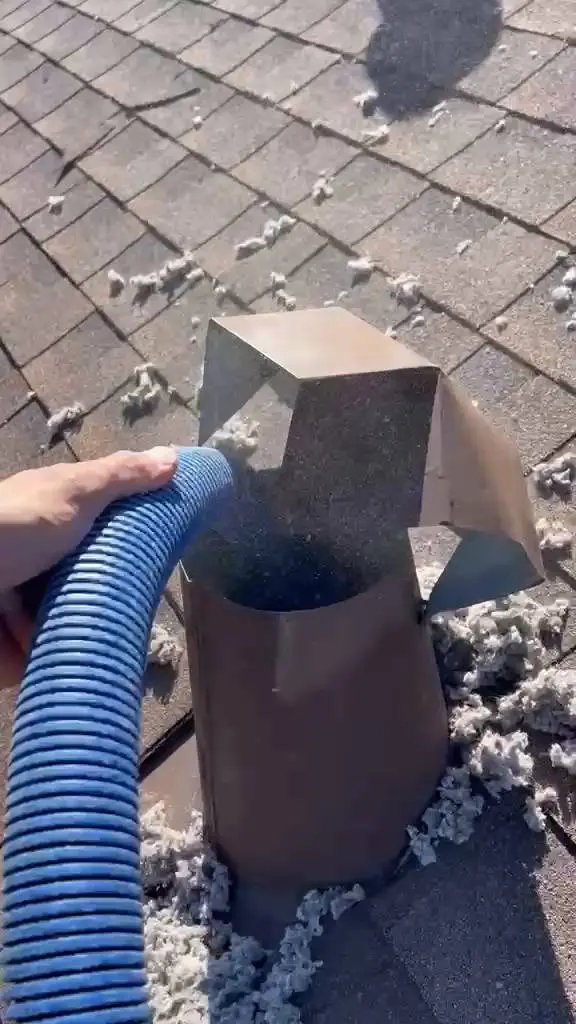
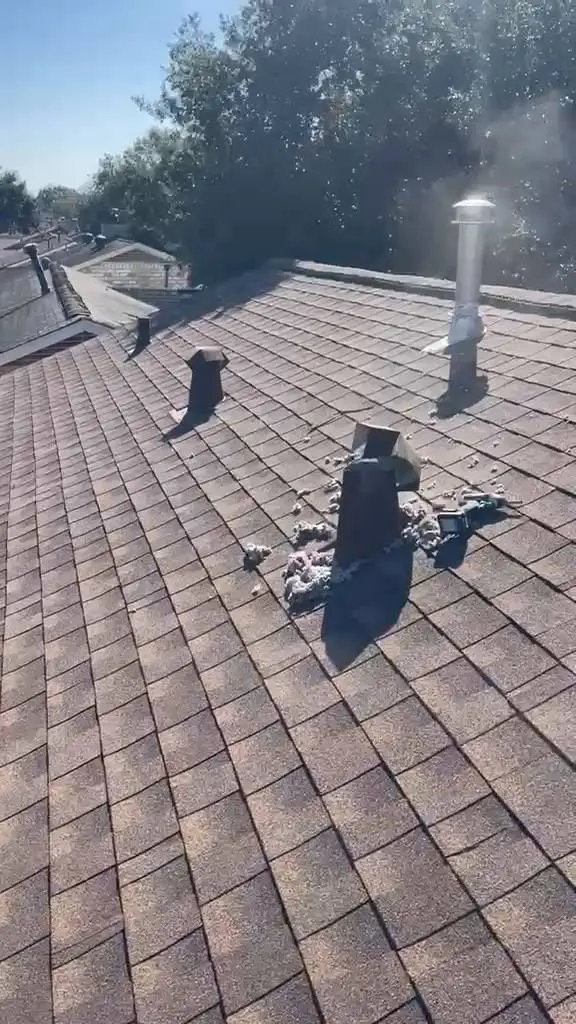
The tech climbed up and went straight to the dryer cap. Clumps of gray lint were caught around the cap itself and scattered on the shingles next to it. That’s lint that made it all the way up the line and then couldn’t get out cleanly. When the cap’s flap gets stiff or the opening narrows with buildup, the lint starts piling up right at the exit. Then the air coming up behind it slows down, and more lint drops out inside the line.
From the ground you’d never see it. The homeowner only knew the dryer was taking longer than it used to.
How We Cleaned It From the Roof
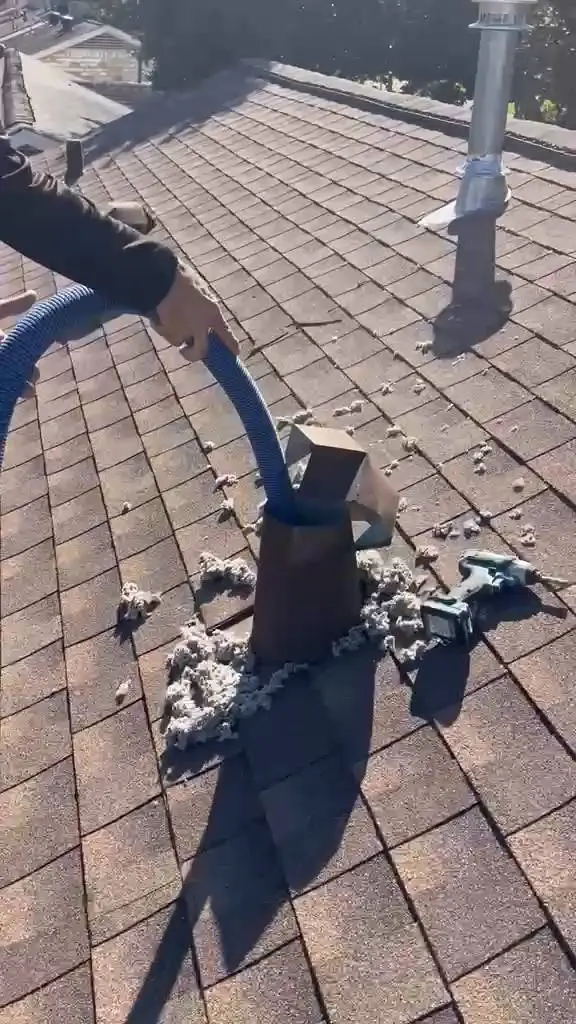
With a roof vent, working from the top gives you a straight shot at the worst of it. The tech opened up the cap and ran the hose into the line from the roof. As the line opened up, lint came out of the cap in puffs. You can see it in the video: a cloud of lint, then a steadier flow as the run clears.
Clearing the cap matters as much as clearing the duct. A clean line that ends in a clogged cap still traps lint, so both get done on the same visit.
Why Roof Dryer Vents Clog Faster
Plenty of homes around Sugar Land have the laundry room in the middle of the house or upstairs, with no outside wall nearby. The builder’s answer is a duct that runs up through the attic and out the roof. It works, but it works against you in a few ways:
- Gravity. Lint is light, but it still falls. Every vertical foot of a roof vent is a place for it to drop back down.
- Length. Roof runs are usually longer than wall runs, so the air loses speed before it reaches the cap.
- Heat and humidity. Warm, damp air from the dryer meets a hot Houston attic. Lint that gets damp clings to the duct wall instead of moving through it.
- The cap. Roof caps have flaps that can stick, and some older ones were fitted with screens that catch lint by design. A screen on a dryer vent is a problem, not a feature.
Because of all that, a roof vent usually needs cleaning more often than a wall vent. Once a year is a good rule. If you run the dryer every day, have a big family or have pets, check it sooner.
Signs Your Dryer Vent Needs Cleaning
You don’t need to climb on the roof to know something’s off. Watch for these:
- Towels and jeans that need a second cycle
- The dryer or the laundry room feels hot when it’s running
- A burning or musty smell while the dryer runs
- Lint collecting around the door seal or behind the dryer
- No airflow, or very weak airflow, at the outside cap when the dryer is on
- The dryer shuts off on its own partway through a cycle
Any one of these means the air isn’t getting out the way it should, and lint is building up somewhere along the line.
This Is a Fire Issue, Not Just a Drying Issue
Clogged vents are one of the leading causes of house fires that start at the dryer. Lint catches easily, and a blocked line keeps heat trapped right where the lint is. A roof vent puts that line inside the attic, which is not where you want a fire to start.
There’s a cost side too. A dryer pushing against a clogged vent runs longer on every load. That shows up on the electric bill and wears out the heating element and the blower sooner.
Dryer Vent Cleaning in Sugar Land
We clean dryer vents across Sugar Land, Missouri City, Richmond, Stafford and the rest of Fort Bend, including roof terminations, long runs and second-floor laundry rooms. Dryer vent cleaning starts at $99. If the line runs through the attic and you haven’t had it cleaned in a year or more, it’s worth a look. See how our dryer vent cleaning works, read about a recent Sugar Land dryer vent job, or check out our air duct cleaning in Sugar Land.
If your dryer is taking longer than it used to, book an appointment online or call us at (832) 699-0888 for a free estimate.