




Chimney Cleaning in Houston, TX
Home » More Services » Chimney Cleaning
A Houston chimney rarely gets a workout. Mild winters, two cold snaps a year, and most of us light maybe four fires the whole season. The problem isn’t use — it’s neglect. Chimneys that sit idle for ten months collect things you don’t see until smoke is backing up into the living room or a structural inspection finds water damage on the firebox: creosote glazing, mortar erosion, animal nests, hurricane-loosened cap flashing, soot blockages from wasps and chimney swifts. By the time something is visibly wrong, the repair bill is usually two or three orders of magnitude bigger than what an annual sweep would have cost.
We’ve been cleaning chimneys across Houston since 2002. CSIA-aware crews working out of Bellaire, Memorial, the Heights, Sugar Land, Spring, Katy, and the rest of the metro. Wood-burning fireplaces, gas log inserts, masonry stacks, prefab metal — we handle all of them, and we’ll tell you straight whether your chimney needs a $179 sweep or a $1,400 cap rebuild. Same dispatcher answers nights and weekends. Same family business since the early 2000s.
Chimney Cleaning for San Antonio & Houston, TX
The conventional wisdom that Houston homeowners can skip annual sweeps because we don’t burn many fires is half right and dangerously wrong. NFPA 211 calls for inspection every twelve months regardless of usage, and the reason it does is everything that happens in a chimney between fires. Humid air running up a cold flue condenses on the smoke shelf. That moisture eats mortar joints from the inside. Hurricane-season storms work the cap loose and water finds its way to the firebox. Critters — squirrels, raccoons, and federally protected chimney swifts — move in during the months you’re not paying attention.
Add the climate factor and Houston gets its own weird creosote problem. Dry climates produce flaky Stage 1 creosote that brushes out in twenty minutes. Houston’s humidity glazes it into Stage 2 ridges that need rotary tools, and if it’s gone untouched for five-plus years, into Stage 3 — a hardened black resin that fuses to flue walls and either gets removed by chemical treatment or by replacing the liner. Stage 3 is what catches fire.
The $179 to $329 you’d spend on a yearly sweep is buying you the avoidance of three separate expensive failures: a chimney fire (usually $4,000-plus in damage), a cracked liner that has to be replaced ($2,500-$4,500), and a smoke-back event when something blocks the flue and your living room fills with carbon monoxide. Annual maintenance is the cheapest insurance you’ll buy for a Houston home with a fireplace.
Why Choose Our Company?
20+ years cleaning Houston chimneys, family-owned since 2002.
CSIA-trained sweeps, NFPA 211 protocols on every job.
Direct billing for storm and hurricane chimney repairs.
Cap, crown, and liner work — no subcontractors.
Written reports with photos of every flue we inspect.
Flat per-job rates — no hourly games, no add-ons mid-job.
Why it is Important to Clean Your Chimney
When wood burns, the gases coming up the flue cool as they rise and condense onto the chimney walls as creosote. That deposit is acidic and flammable, and it’s the single most common cause of chimney fires in residential structures. Once it ignites, internal flue temperatures hit 2,000°F in minutes. Mortar joints fail, ceramic liners crack, and in masonry chimneys the heat can travel through the structure into framing. Thousands of Houston-area chimney fires happen every year, most of them in homes the owner thought had a safe fireplace because “we hardly ever use it.”
Beyond fire risk, neglected chimneys cause carbon monoxide intrusion (a partial blockage from soot or a bird nest is enough), water damage to ceilings and walls (a failed cap or crown lets rain straight into the flue), and the kind of acrid smoke smell that gets baked into upholstery and never quite leaves. Annual cleaning catches all of it before it becomes a claim.
Customer Testimonials
Why You Should Hire a Professional to Do Your Chimney Cleaning
DIY chimney cleaning videos make it look simple. The reality is that doing it wrong is more dangerous than not doing it at all — you can knock soot down into a damper that won’t close again, miss creosote glazing on the smoke shelf, dislodge bricks in older Houston masonry chimneys, and there’s no way to inspect a flue properly from the bottom up without a camera and the training to read what you’re seeing. Here’s what professional service adds:
- Camera inspections — we run a closed-circuit camera up the flue from the firebox, the only way to actually see Stage 2 and Stage 3 creosote, cracked tiles, or water-damaged liner sections. You get the footage to keep.
- Right tool for the actual condition — Stage 1 creosote brushes out, Stage 2 needs a rotary chain or whip system, Stage 3 needs chemical pre-treatment plus mechanical removal. Most homeowners don’t know which they have until a pro tells them.
- Wildlife removal that’s legal — chimney swifts are protected under the federal Migratory Bird Treaty Act. Sweeping them out during nesting season is a $15,000 fine. We work around the protected window and do exclusion work after.
- Real reporting for insurance and resale — Houston insurance carriers and home inspectors increasingly require written sweep records. Our reports include CSIA-format documentation that satisfies both.
How the Chimney Cleaning Process is Done
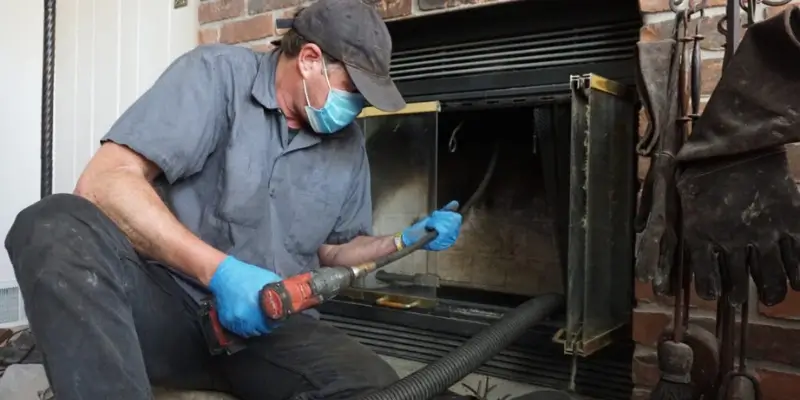
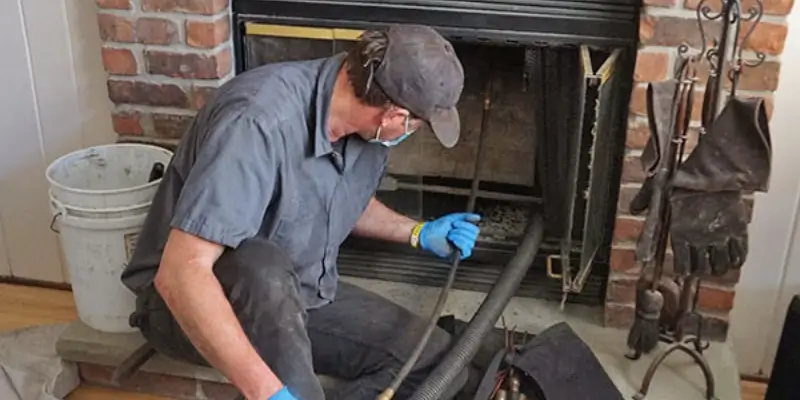
Every job starts with a Level 1 inspection — visual check of the firebox, damper, smoke chamber, and the readily accessible portions of the flue. From there we set up containment in the room: tarps over the hearth, a HEPA-filtered vacuum running negative pressure at the firebox so soot stays in the chimney, not on your floor. We don’t take the “drop cloth and a prayer” approach.
For the actual sweep, the technician runs the brush from the top down or bottom up depending on the chimney’s pitch and accessibility. Houston’s mix of older masonry and 1990s-2000s prefab chimneys means we carry a half-dozen different brush types and rotary heads. After mechanical sweeping, we drop a camera down the flue to confirm we’ve got the deposits down, photograph any cracks or worn liner sections, and pull the debris up into the vacuum.
What you do beforehand: clear a three-foot space around the fireplace and let the chimney be cold (no fire for 24 hours). What we leave behind: a clean fireplace, a written report with photos, and a clear answer about whether the chimney needs anything beyond the sweep — cap repair, liner work, crown sealing, or just another sweep next year. Most jobs run 60-90 minutes start to finish.
Frequently asked questions
Do I need a chimney sweep if I rarely use my fireplace in Houston?
Yes. NFPA 211 calls for annual inspection regardless of usage, and the reason is what happens between fires. Humid air condenses on the cold flue, mortar joints erode, animals move in, hurricane caps loosen, and any creosote that does form glazes harder in our climate than in dry parts of the country. Houston homes that “barely use” the fireplace are exactly the ones that have surprises waiting when they finally light a fire.
What are chimney swifts and why can’t they be removed during certain months?
Chimney swifts are small migratory birds that nest inside masonry chimneys across Texas. They’re protected under the federal Migratory Bird Treaty Act, which means physically removing an active nest, eggs, or chicks between roughly mid-April and the end of August is a federal violation carrying fines up to $15,000 per bird. We work around the protected season and install exclusion screens in late fall to keep them from coming back the next spring.
How do I know if my chimney has creosote buildup?
You usually don’t until a sweep tells you. Some signs you can catch on your own: black deposits visible above the damper when you shine a flashlight up, a strong barbecue or tar smell on humid days, smoke that doesn’t draw cleanly when you light a fire, or visible flakes falling into the firebox. Stage 2 and Stage 3 creosote — the dangerous kinds — usually aren’t visible from the firebox without a camera.
Did Hurricane Beryl or Harvey damage my chimney?
Possibly. Both storms drove water sideways for hours and pulled or cracked chimney caps across thousands of Houston homes. The damage often isn’t visible from the ground — you’d see it as water stains on the ceiling near the chimney chase, mortar deterioration on the firebox, or a cap that’s tilted or missing. Insurance carriers were paying for cap and crown work on storm claims, but those windows close. A Level 2 inspection catches it.
What’s the difference between a Level 1, Level 2, and Level 3 inspection?
Level 1 is the standard annual inspection — visual check of accessible parts of the chimney with a flashlight and basic tools. Level 2 is required when the home is being sold, after a chimney fire or storm event, or when changes are made (new appliance, liner replacement). It includes camera inspection of the full flue. Level 3 is destructive — partial demolition required to access concealed sections, used only when Level 2 reveals a problem we can’t see otherwise. Most Houston jobs are Level 1 with a camera assist.
Do you handle gas log fireplaces and wood-burning, or just one?
Both. Gas log chimneys still need annual sweeps — the byproducts of natural gas combustion are different (more water vapor, less creosote) but they cause their own issues including liner corrosion and pilot orifice clogging. Vent-free units don’t need sweeping but should still have annual safety inspection. Wood-burning gets the full sweep + camera + cap check.
Will the cleaning make a mess inside my home?
If it’s done right, no. We set tarps over the hearth, run a HEPA vacuum at negative pressure on the firebox, and seal the fireplace opening before any brushing happens. Soot goes up the vacuum, not into the room. The “messy chimney sweep” stereotype comes from old practices that haven’t been industry standard in 30 years.
How long does the service take?
60 to 90 minutes for a standard Level 1 sweep with camera inspection on a single chimney. Add 30 minutes if a cap inspection from the roof is needed, or 60-plus if Stage 2 creosote requires rotary work. We tell you the actual time when we arrive and inspect — no estimating sight unseen.
What does chimney cleaning cost in Houston?
$179 to $329 for a standard sweep with camera inspection. Stage 2 creosote work runs $375 to $550. Cap replacement is $250 to $750 depending on size and material. Crown sealing or rebuild starts around $400. We give a flat written estimate before any work starts — no surprise charges.
What areas around Houston do you cover?
The full greater Houston metro — Bellaire, Memorial, Heights, Galleria, Energy Corridor, Sugar Land, Katy, Cypress, Spring, The Woodlands, Pearland, Friendswood, League City, Pasadena. We also dispatch to Conroe, Galveston, and surrounding counties for whole-service jobs. Call (832) 699-0888 with your zip code.