A day spa runs its laundry about as hard as a restaurant runs its grill. Towels, robes, sheets and face cradle covers go through the dryers all day, and nearly all of it is cotton. Cotton sheds lint, and a lot of it. When the manager of a spa on San Felipe in the Tanglewood area noticed towels coming out damp after a full cycle, she called us to look at the vent system.
What we found is common in commercial buildings, and the people who work there almost never see it. The vent ran a long way above a drop ceiling, with an inline booster fan pulling air through it. That fan was so packed with lint it was barely moving any air.
Why Commercial Dryer Vents Clog Faster Than Home Vents
A household dryer might run five or six loads a week through a short duct that goes straight out a wall. A spa, salon or small hotel can run that many loads before lunch. Every load sends fine lint past the lint screen and into the duct, and more volume means more buildup. That’s why commercial dryer vent cleaning runs on a much shorter schedule than residential work.
Layout makes it worse. Commercial laundry rooms often sit in the middle of a building, nowhere near an outside wall. Building codes limit how long a dryer vent can be before the dryer can’t push air through it alone. When a run is longer than that, the installer adds a booster fan (sometimes called a dryer exhaust power ventilator) somewhere along the duct to keep air moving.
Booster fans solve the distance problem but bring one of their own. The fan wheel spins right in the lint stream, and lint sticks to the blades and collects in the housing. Once the wheel is coated, the fan moves less air, lint settles in the duct faster, and the whole system slows down.
What the Outside Wall Told Us First
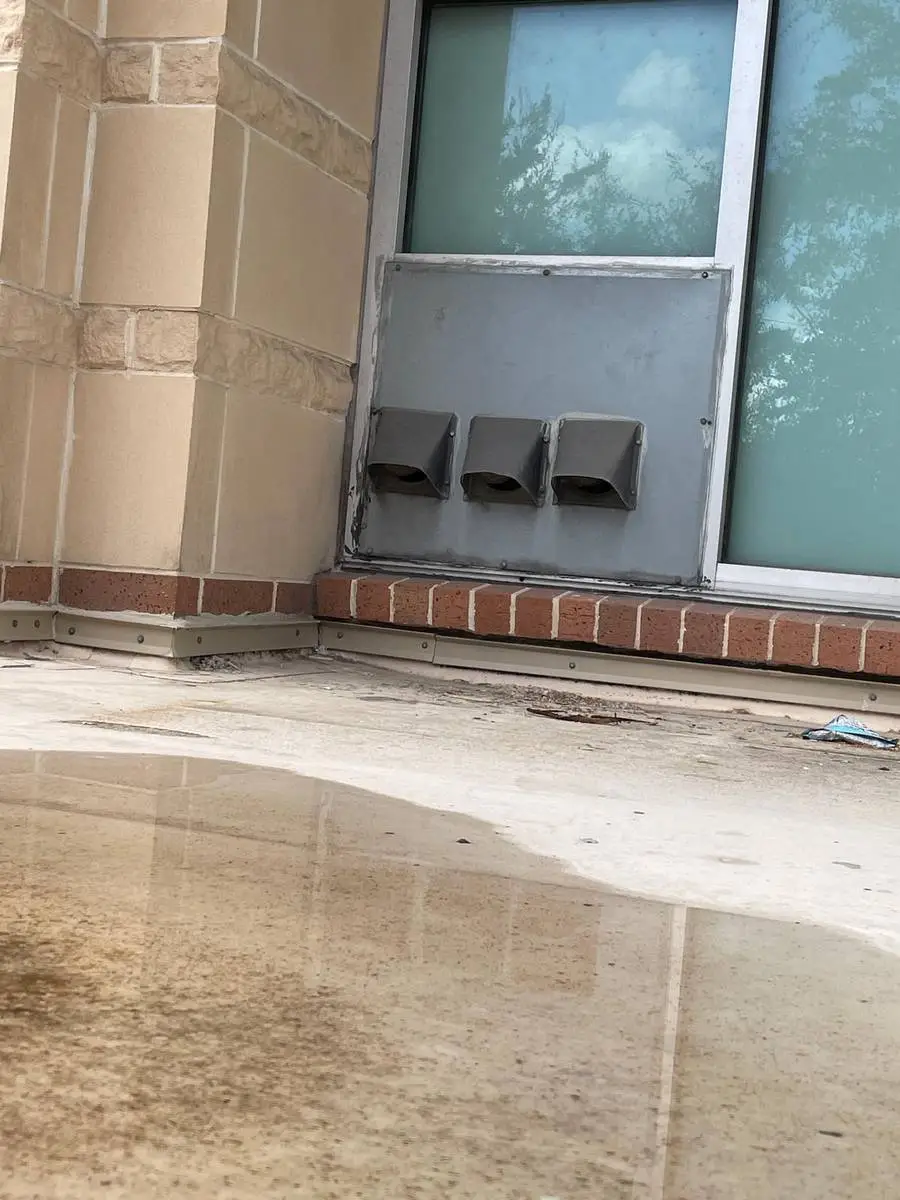
We always start where the air comes out. The building had several dryer vent hoods on the exterior wall, and the wall under them was streaked gray. That staining comes from damp, lint-heavy exhaust hitting the surface over and over, and it means a lot of lint is getting through the system.
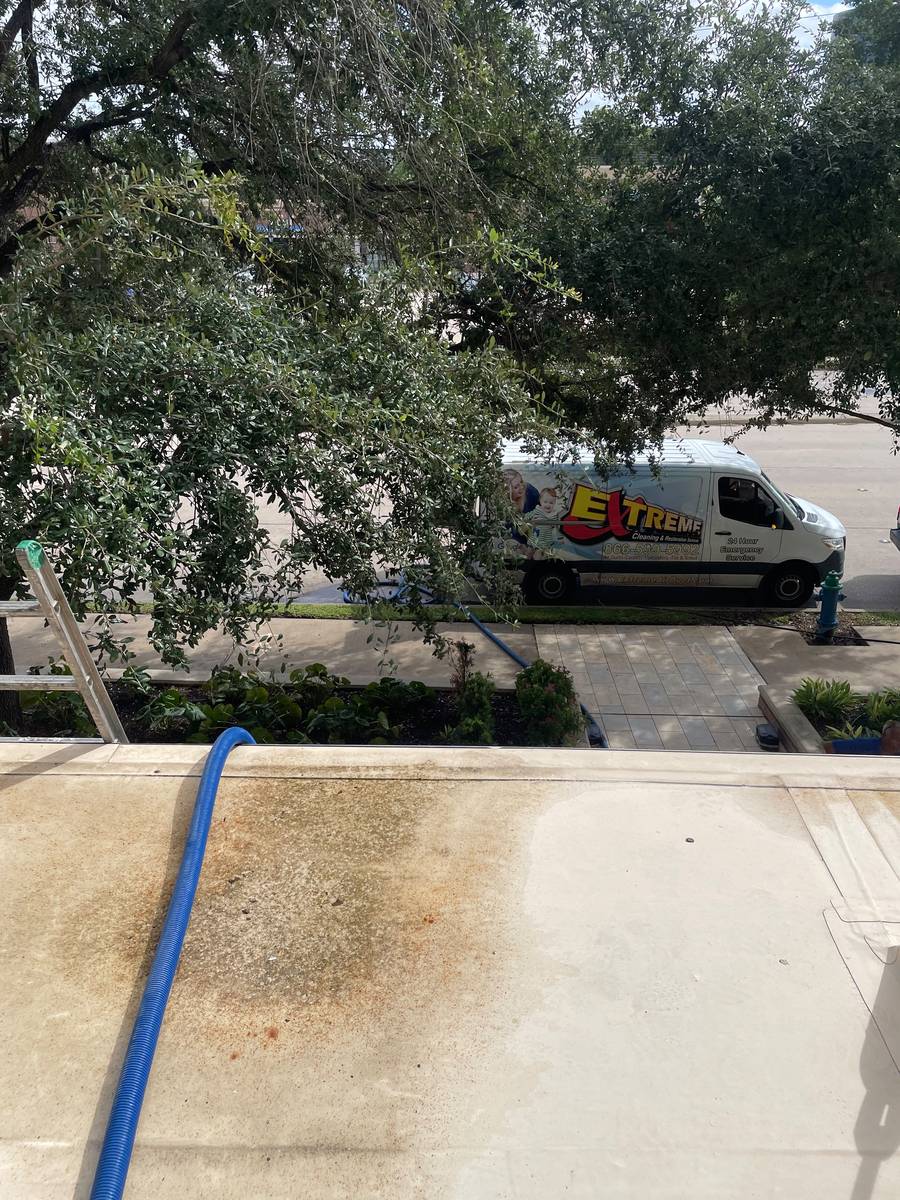
The ledge below the hoods had a thick layer of lint on it. Some of that is normal for a busy laundry. This much usually means the hood flaps aren’t fully opening or closing, and the duct behind them is loaded. Weak, uneven exhaust at the hood was our first real clue that something upstream was choking the airflow.
Following the Duct Above the Ceiling
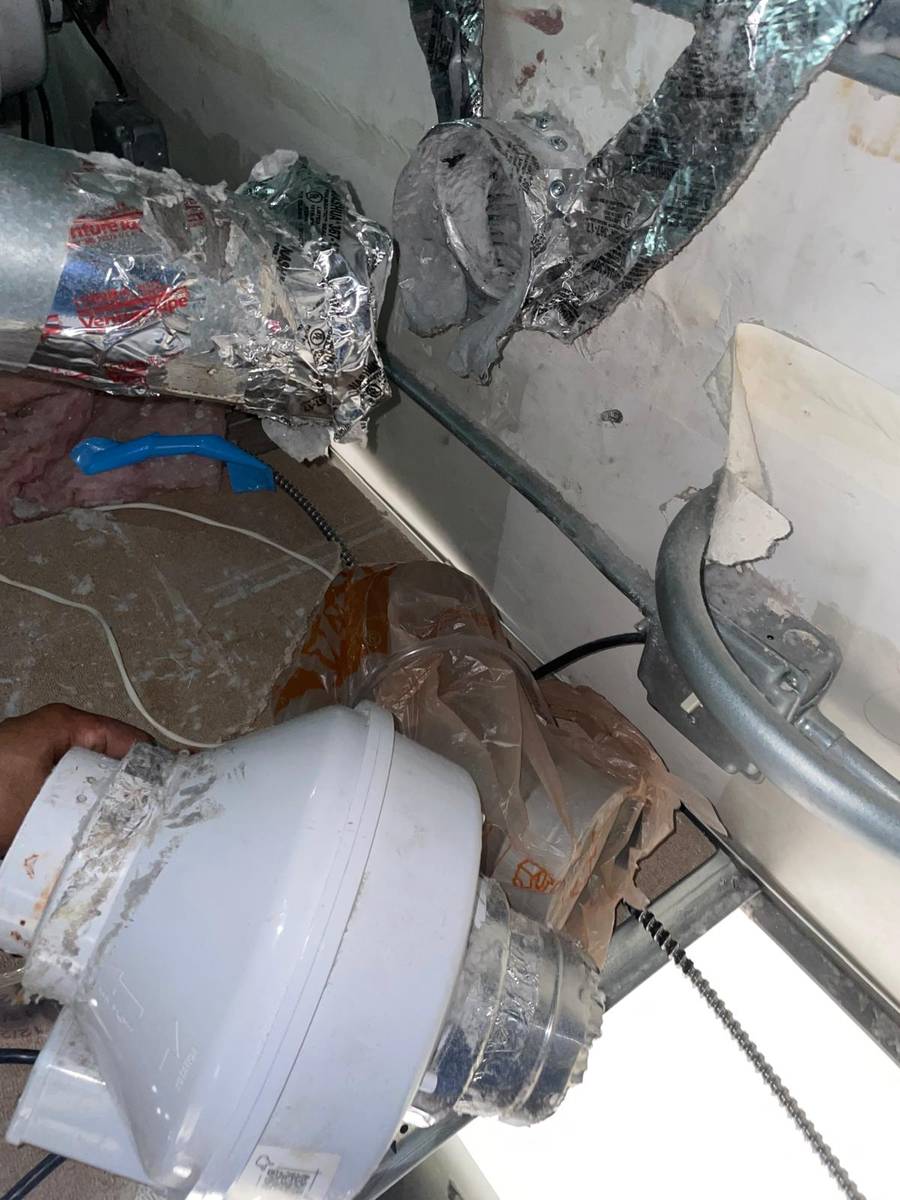
Inside, we pulled ceiling tiles along the path of the vent. The metal duct ran a long way from the laundry area toward the outside wall, which is exactly the kind of run that needs mechanical help to keep moving air.
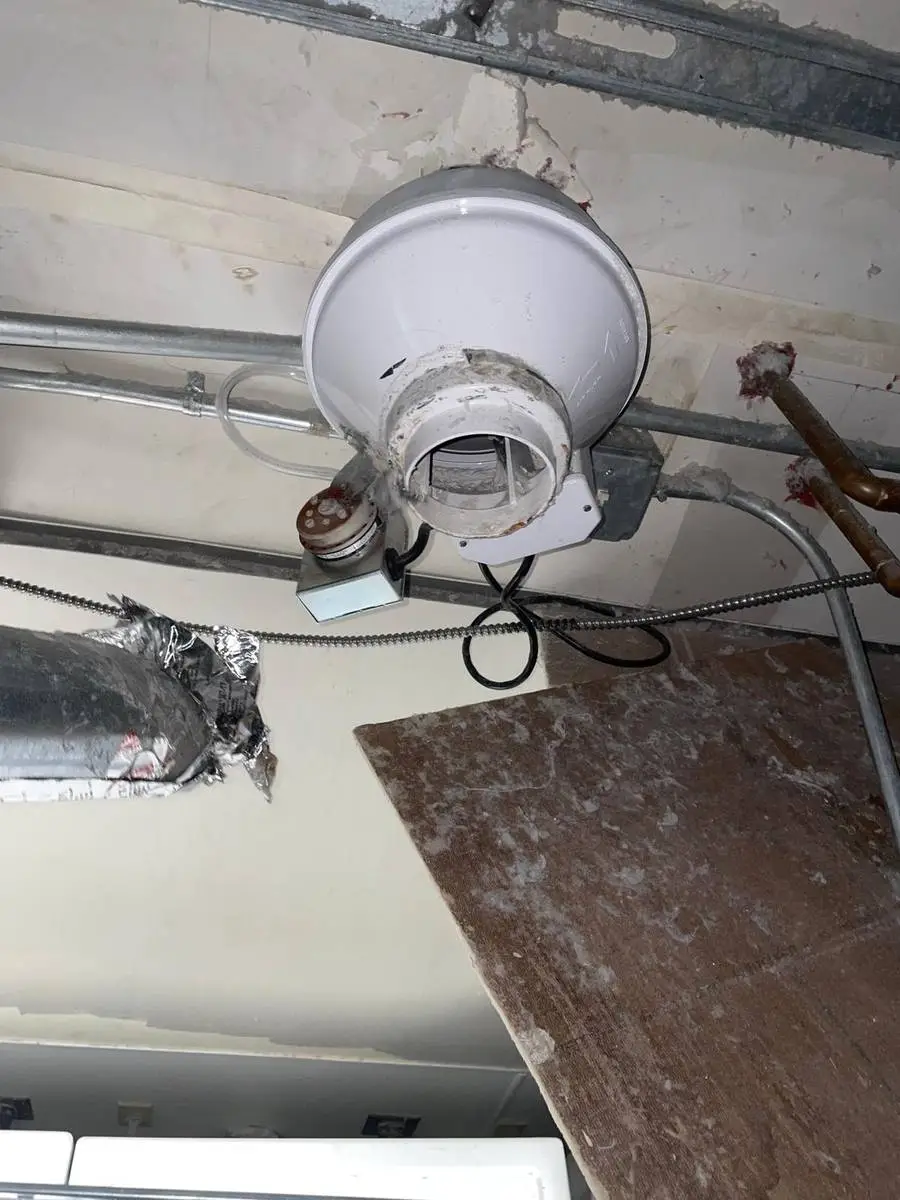
There it was: an inline booster fan spliced into the duct above the ceiling. Nobody on staff knew it was there, and that’s normal. These fans get installed during a build-out, the ceiling goes back up, and they’re forgotten until airflow drops off.
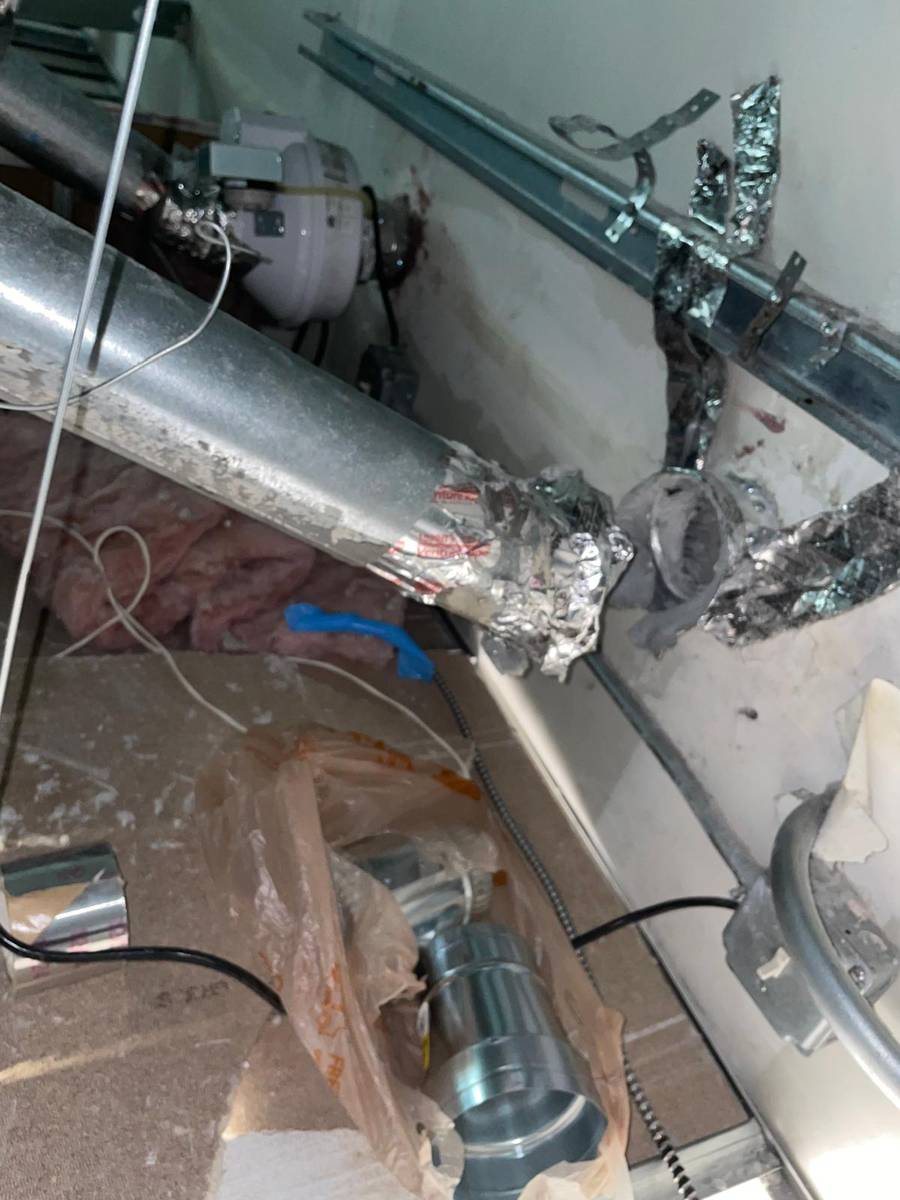
We traced the full run in both directions from the fan so we knew every joint and section we had to clean before taking anything apart.
The Booster Fan Was the Choke Point
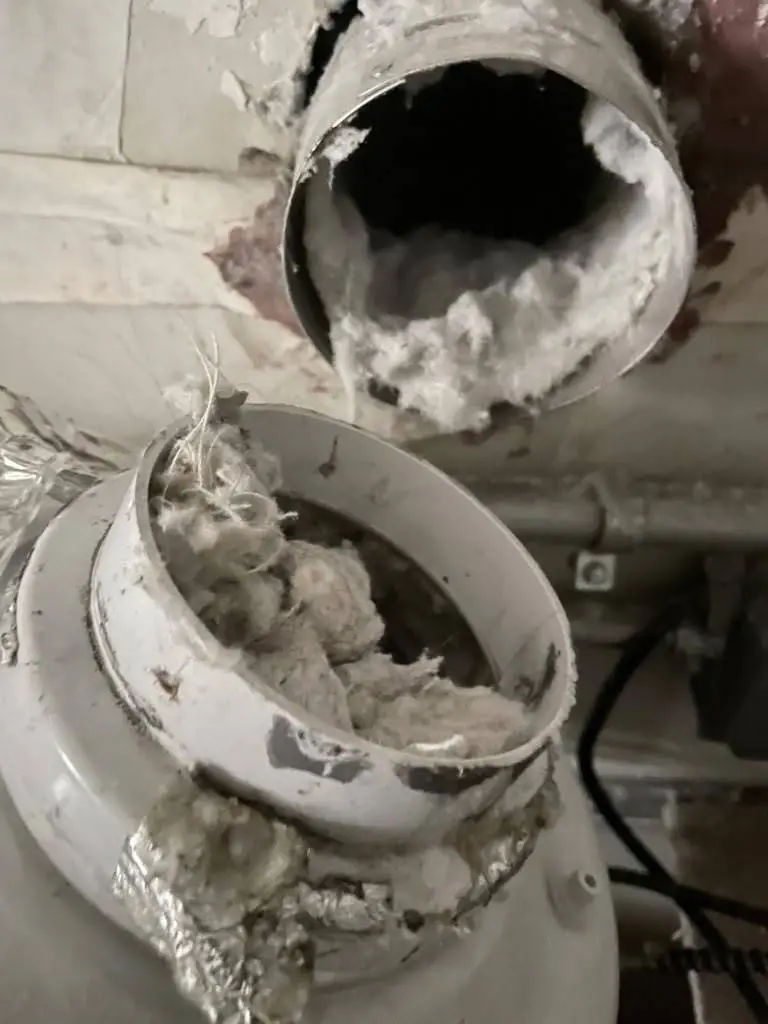
With the power to the fan shut off, we opened the housing. Lint filled the inside of it, packed around the wheel and caked into the corners where airflow slows down.

The fan wheel was the worst part. Lint had built up on the blades until they were barely shaped like blades anymore. A wheel like that spins but doesn’t move much air. The dryers push against the restriction, cycles get longer, the dryer runs hotter, and the motors on both the dryer and the fan work harder than they were built to.
It’s also a fire risk. Lint burns easily, and a dryer vent is a warm, enclosed space with steady airflow. The U.S. Fire Administration lists failure to clean as the leading cause of dryer fires. Put a big load of lint inside a motorized fan housing hidden above a ceiling, where nobody would see smoke until it was already a problem, and the risk is obvious.
How We Cleaned the Full Vent System
We cleaned the system end to end, not just the part we could reach:
- Shut off the booster fan power before touching the housing or wheel.
- Removed the packed lint from the fan housing by hand first, then cleaned it out with HEPA vacuum collection so it didn’t drop into the ceiling or onto the floor below.
- Cleaned each blade on the fan wheel until the metal was bare and the wheel spun freely and in balance.
- Ran a rotary brush through the duct sections on both sides of the fan, working toward the collection point to break loose lint stuck to the duct walls.
- Cleared the duct connections at the fan inlet and outlet, where lint tends to collect on seams and fasteners.
- Cleaned the exterior hoods and checked that each flap opened fully under airflow and closed when the dryers stopped.
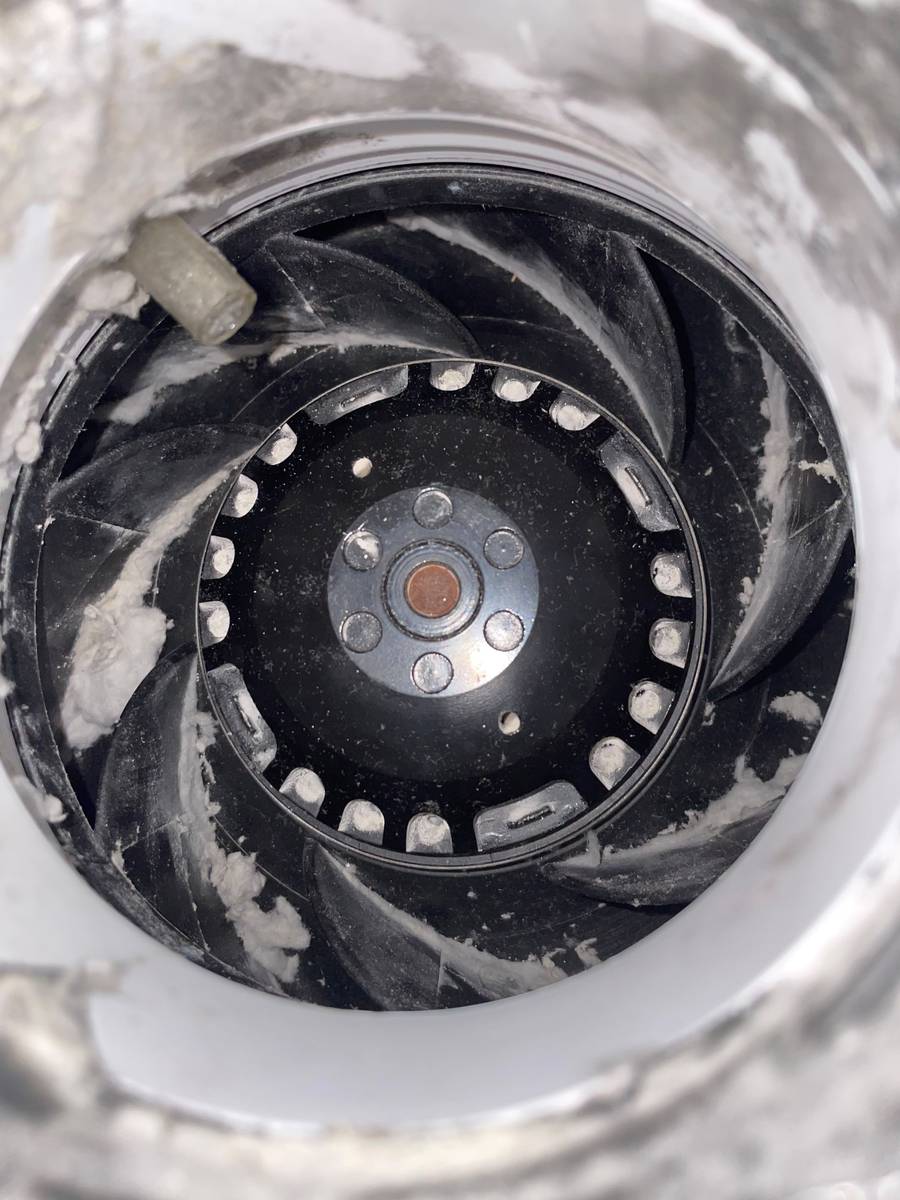
Compare this photo with the one above. Same fan wheel. With the blades clear, the fan can move the air it was designed to move.
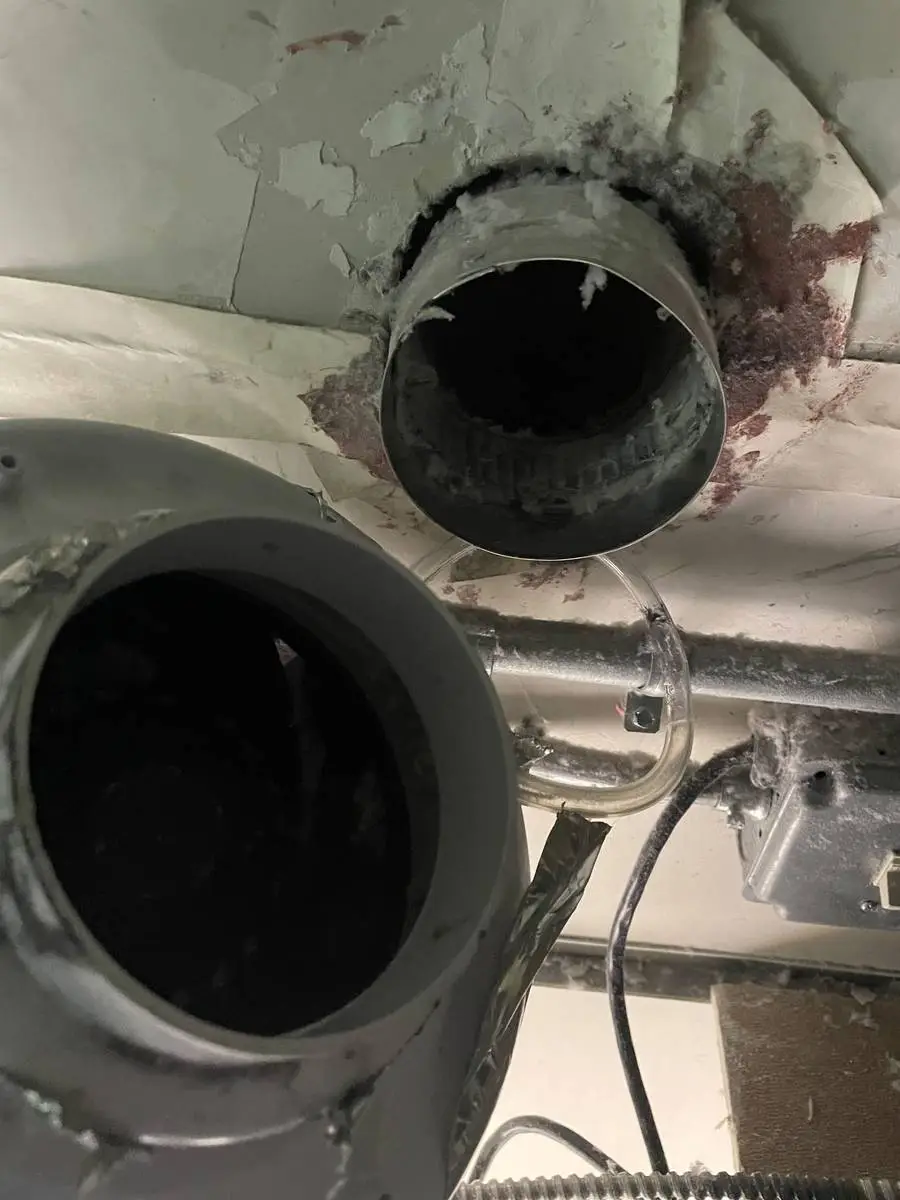
Then we put the fan back in the line, sealed the connections and turned everything back on. With the dryers running, we checked exhaust at the outside hoods. The air coming out was strong and steady where before it had barely pushed. For a laundry running that many loads a day, shorter dry times add up fast in labor, energy and wear on the machines.
How Often Should a Spa or Salon Clean Its Dryer Vents?
There’s no single schedule that fits every business, but here’s a reasonable guide:
- Busy spas, salons, gyms and small hotels: every 3 to 6 months, depending on load volume and how long the duct run is.
- Systems with a booster fan: inspect the fan wheel at every cleaning. It usually loads up before the duct does.
- Lighter use: at least once a year.
Signs that it’s time:
- Towels need a second cycle to dry
- The laundry room feels hotter or more humid than usual
- Lint or staining collects around the outside vent hoods
- The dryer or booster fan is louder than normal, or rattles
- A burning smell when the dryers run
If you see any of these, don’t wait for the next scheduled cleaning.
Commercial Dryer Vent Cleaning in Tanglewood and Across Houston
We clean dryer vents for spas, salons, restaurants, apartment complexes, gyms and offices in the Galleria area, Tanglewood, Uptown, River Oaks, Memorial and all across Houston. Long ceiling runs, rooftop terminations and booster fans are routine work for our crews (we handle commercial air duct cleaning too), and we schedule around business hours so your laundry keeps running.
If your dryers are slowing down or you aren’t sure when the vents were last cleaned, call Extreme Air Duct Cleaning & Restoration or book a commercial dryer vent inspection.