

Most homeowners picture dust when they think about dirty air ducts. A thin gray layer, maybe some pet hair. What we found inside this air handler in southwest Houston was a different kind of problem: a strip of wood and a chunk of brick sitting in the return plenum, a floor covered in loose debris, and a pile of droppings right next to the airflow path.
The homeowner called because the house always seemed dusty no matter how often they cleaned. Here’s what was behind that, and how we fixed it.
What a Return Plenum Does
Every central AC system has two sides. The supply side pushes cooled air into your rooms. The return side pulls air back to the unit so it can be cooled again. The return plenum is the box where all that air collects before it passes through the filter and over the coil.
Since every bit of air in the house passes through it, anything sitting inside a return plenum gets stirred up every time the system runs. Loose debris, dust and droppings don’t stay put. Small particles break off and ride the airflow.
What We Found Inside
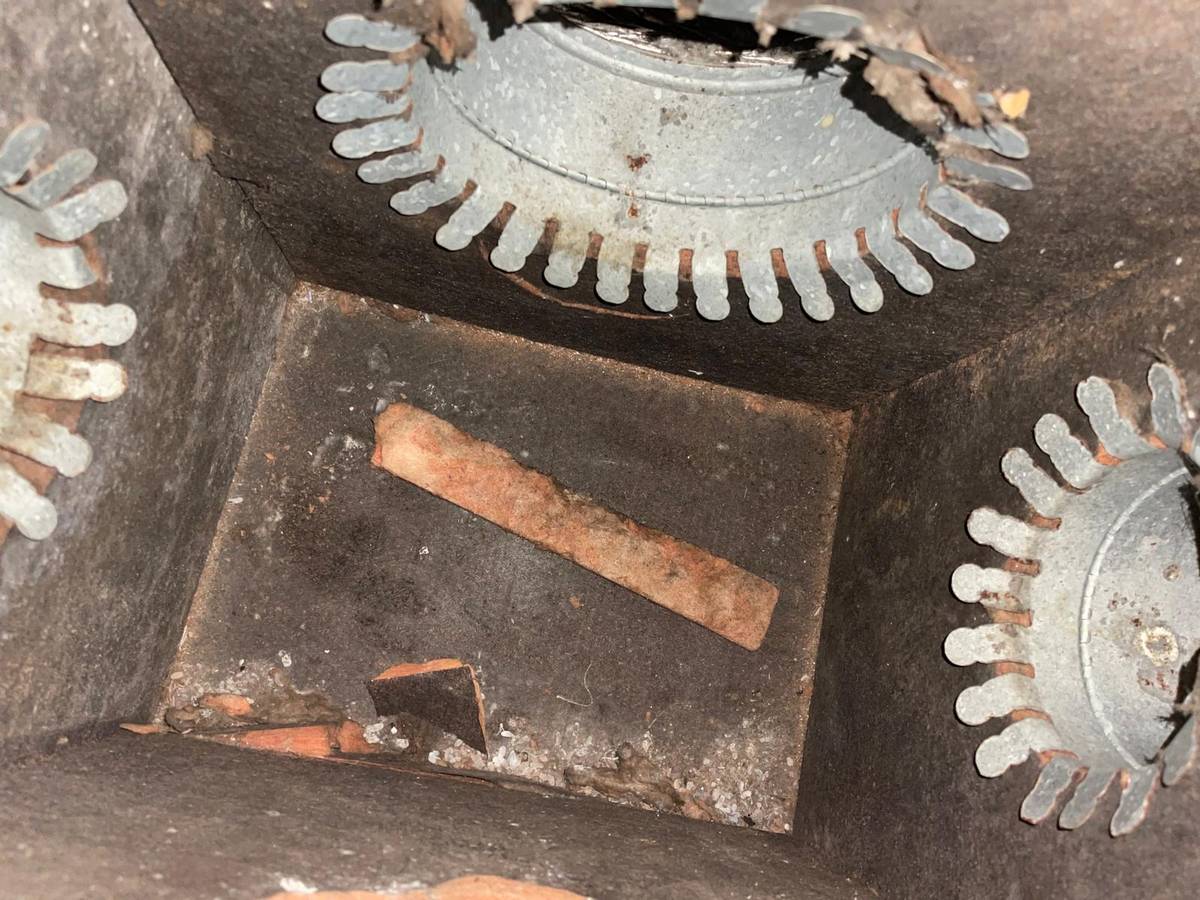
The first thing we saw when we opened the plenum was a strip of wood and a broken piece of brick lying on the bottom panel. This is leftover construction debris. It was most likely dropped in during a remodel or an equipment change and never taken out. It’s more common than you’d think, and the homeowner had no way of knowing it was there.
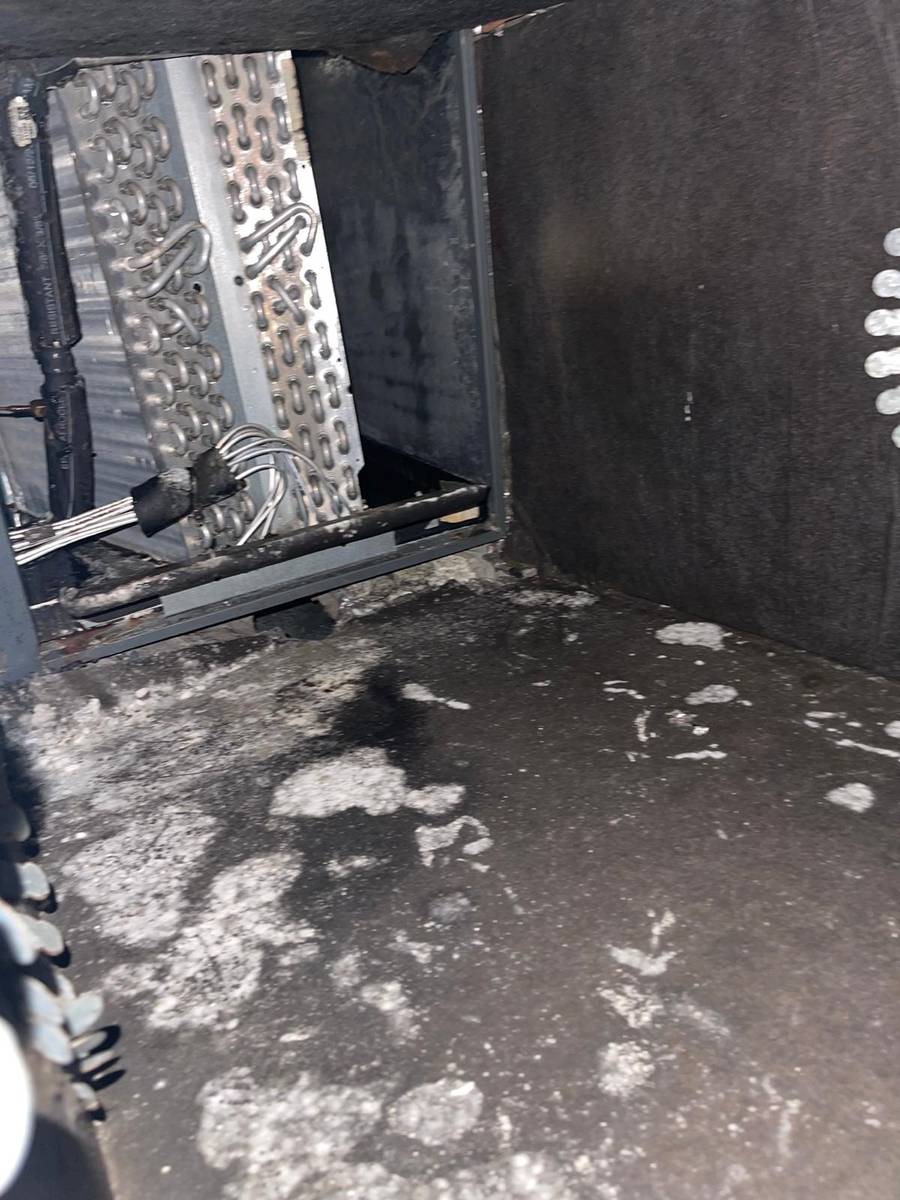
Next to the coil, the plenum floor was scattered with white debris and dark staining. The walls in this system are ductboard, a rigid fiberglass panel with a textured inner surface. Dust grips that surface and builds up in layers instead of blowing through.
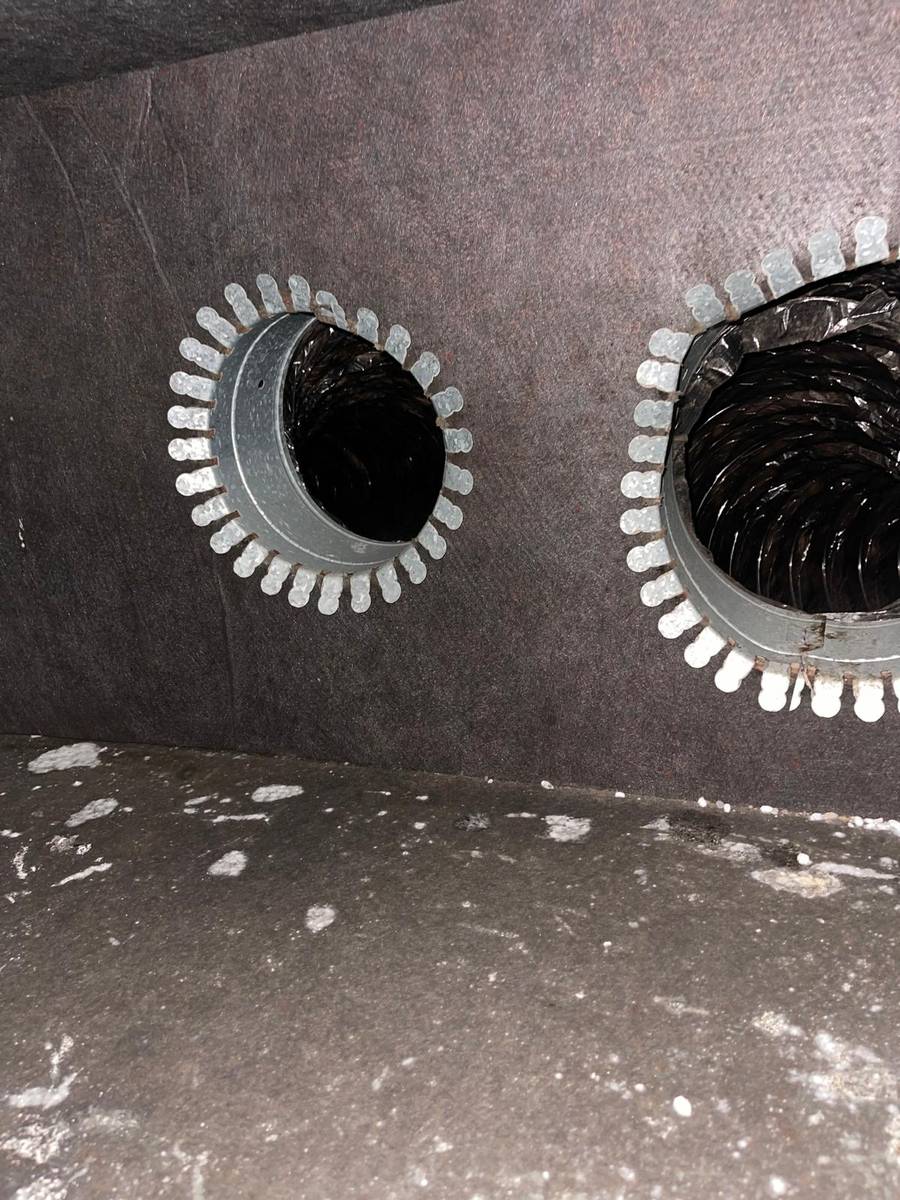
The same thing showed up around the supply collars, where the flex ducts connect to the plenum. Debris had settled along the floor and the edges of each opening.
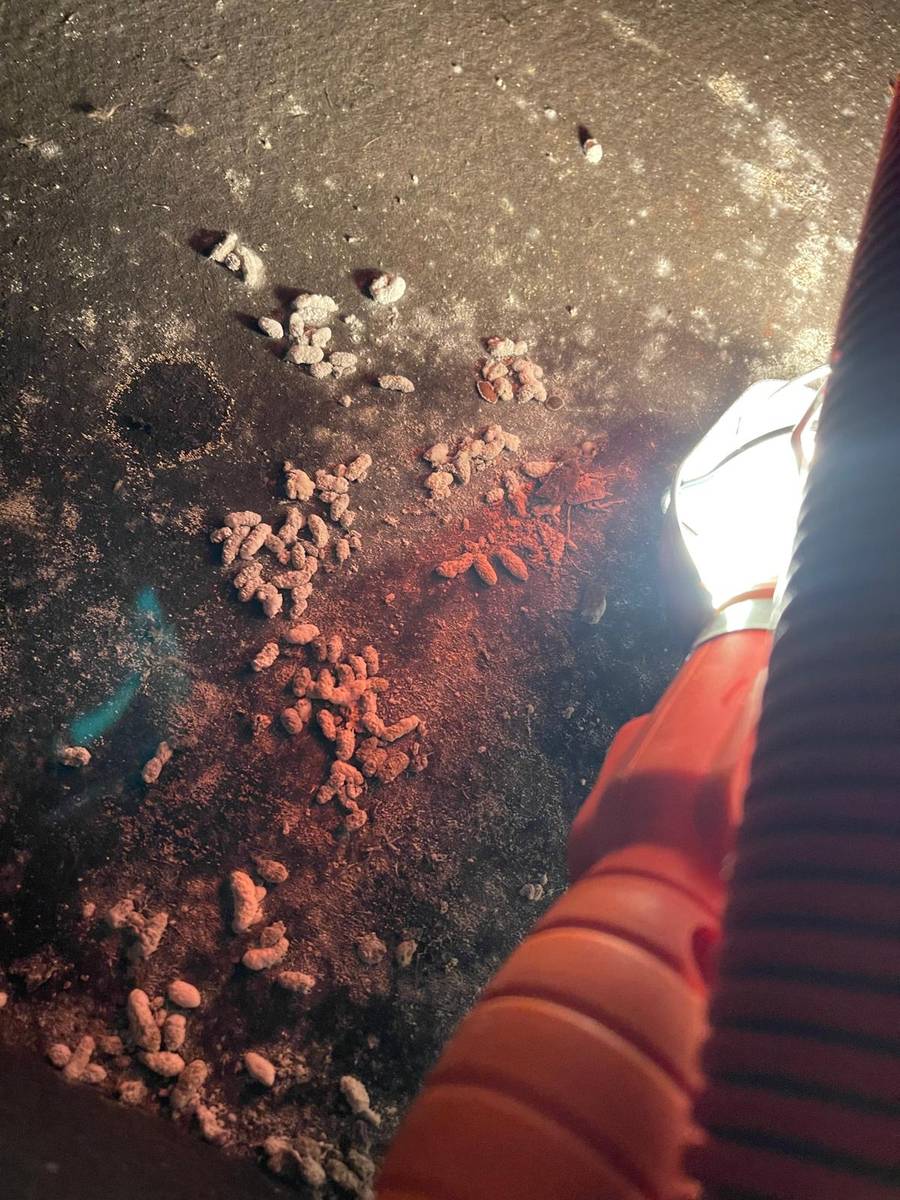
Then we found the droppings. A cluster of them sat on the plenum floor along with reddish dust, close enough to the airflow that the system was moving air right across them. When we see this, we tell the homeowner right away, because cleaning the ducts doesn’t solve the problem if pests can still get in. We recommended having a pest control company inspect the attic and seal any entry points.
The Flex Duct Runs
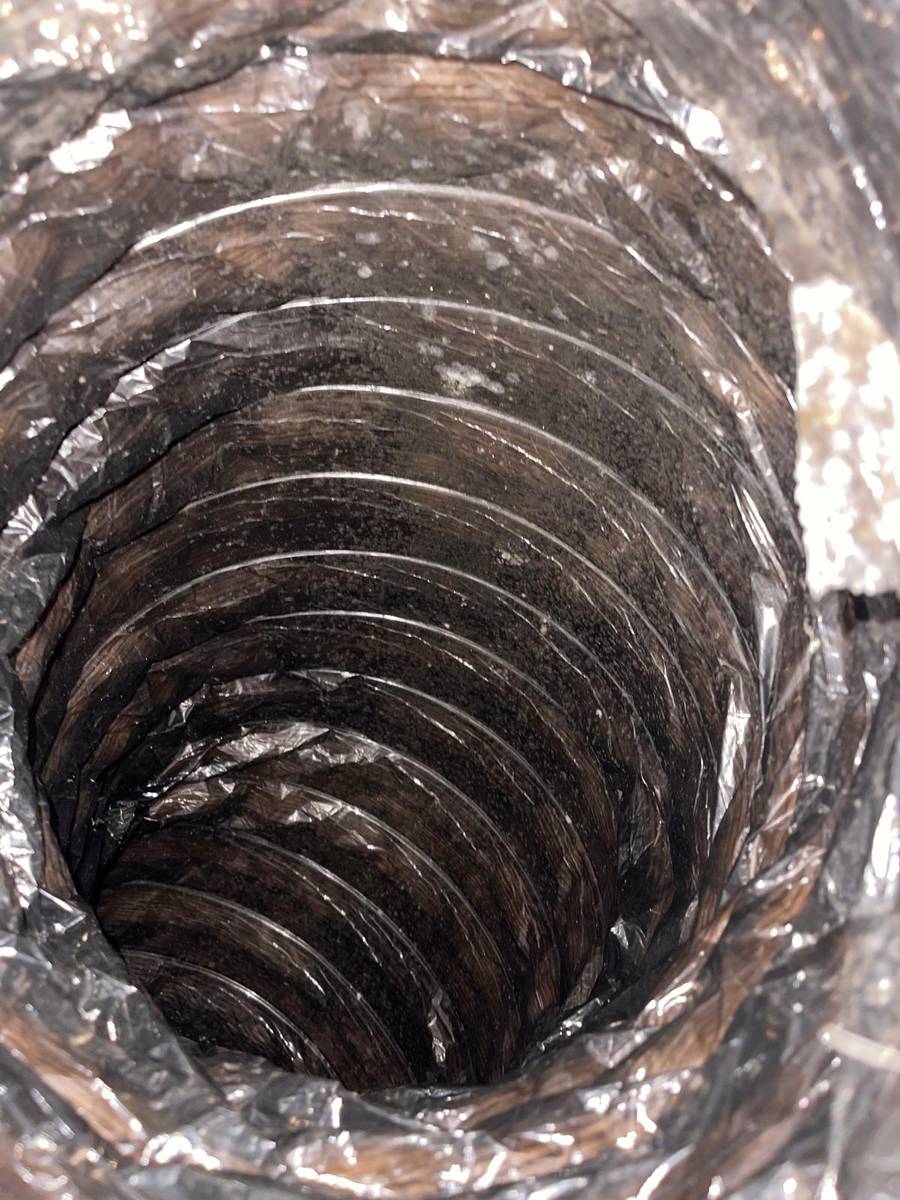
The flex ducts that carry air from the plenum to each room had their own buildup. You can see the dark coating along the inner liner.
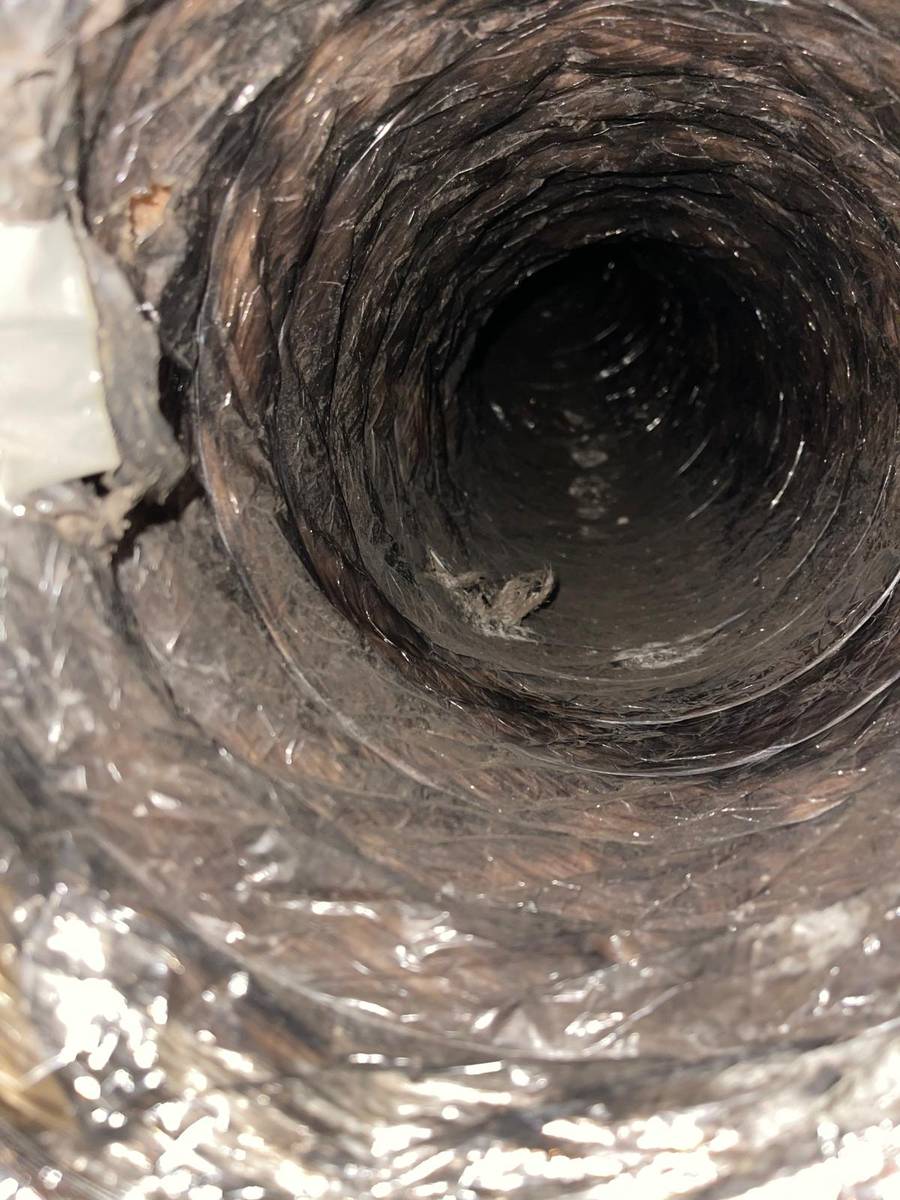
This run had dust and loose bits collected along the ribs of the liner. Flex duct is ribbed, so every ridge becomes a small shelf for debris.
How We Cleaned It
Ductboard has to be cleaned differently from metal ductwork. A spinning rotary brush shreds the fiberglass face and throws loose fibers into the airstream, so we don’t use one on ductboard. Here’s what we did instead:
- Removed the debris by hand. The wood, the brick and the large loose material came out first.
- Cleaned up the droppings carefully with HEPA vacuum collection, so nothing was disturbed into the air.
- Air-washed the ductboard plenum. Compressed air knocked dust loose from the textured surface while a high-powered HEPA vacuum held the system under negative pressure and pulled everything out.
- HEPA contact vacuumed the plenum floor and walls to pick up what the air wash loosened.
- Cleaned each flex duct run from the plenum out to the room registers, with the same negative-pressure collection running the whole time.
- Cleaned around every supply collar, where debris tends to pile up at the connection.
The Results
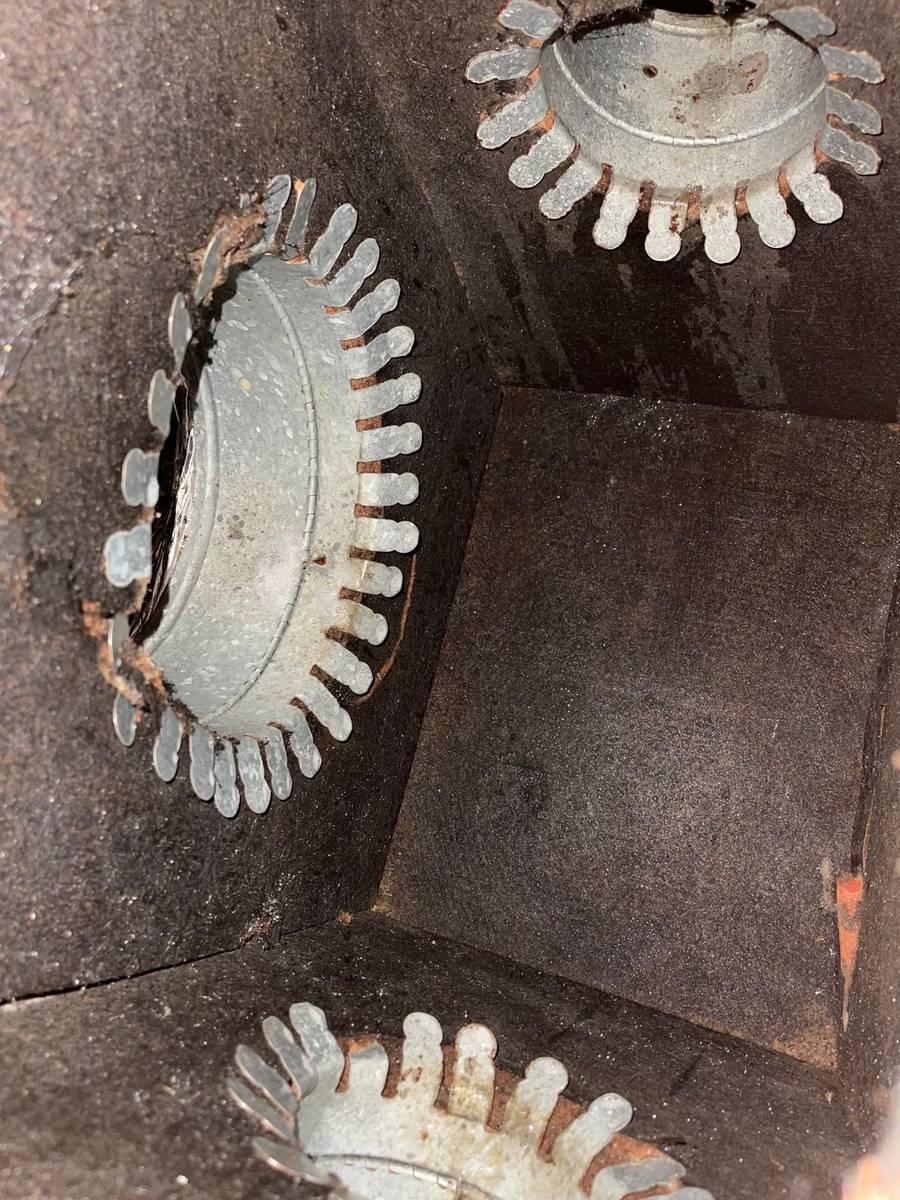
Here’s the plenum after cleaning. The debris, the droppings and the loose dust are gone, and the ductboard surface is intact with no torn fiberglass.
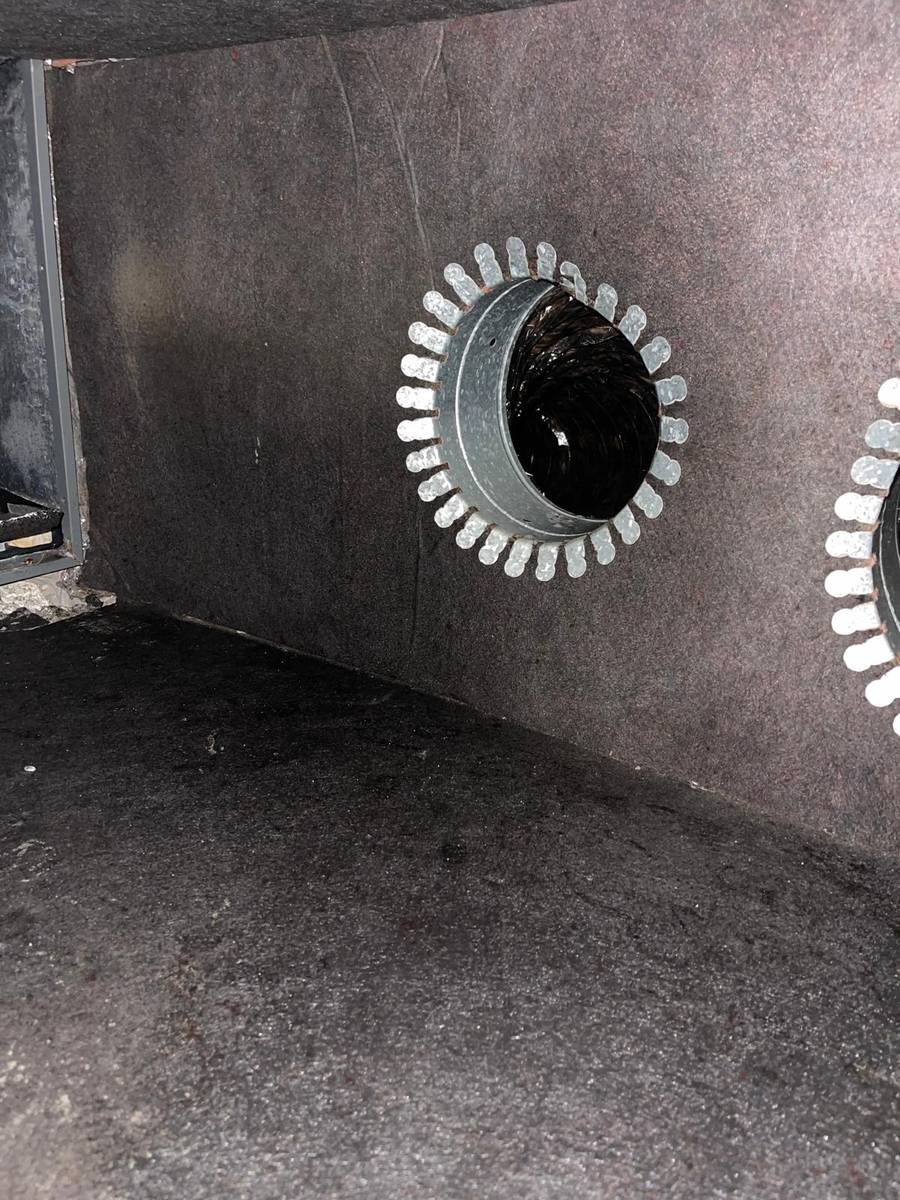
The supply collar wall, cleaned.
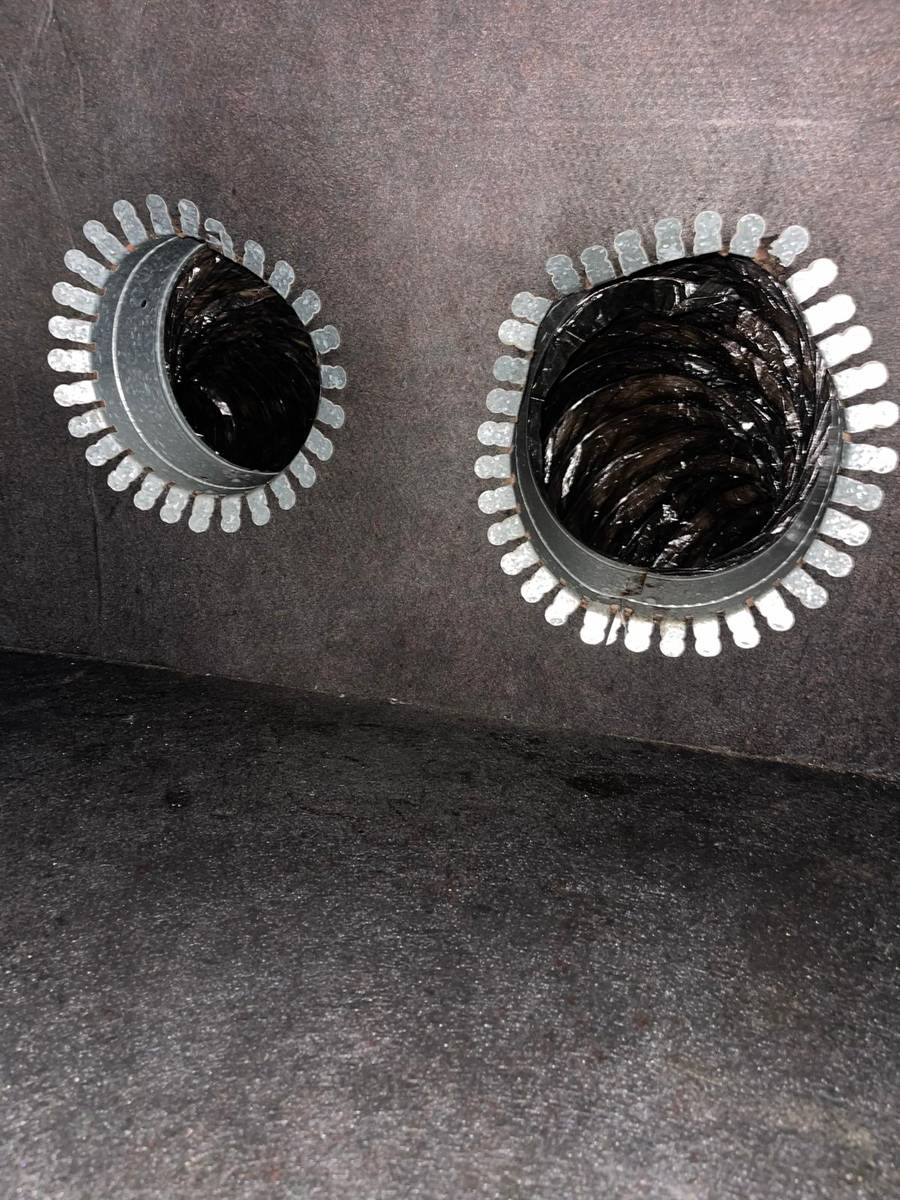
Both collars and the floor below them, cleaned. Compare this with the earlier photo of the same area.
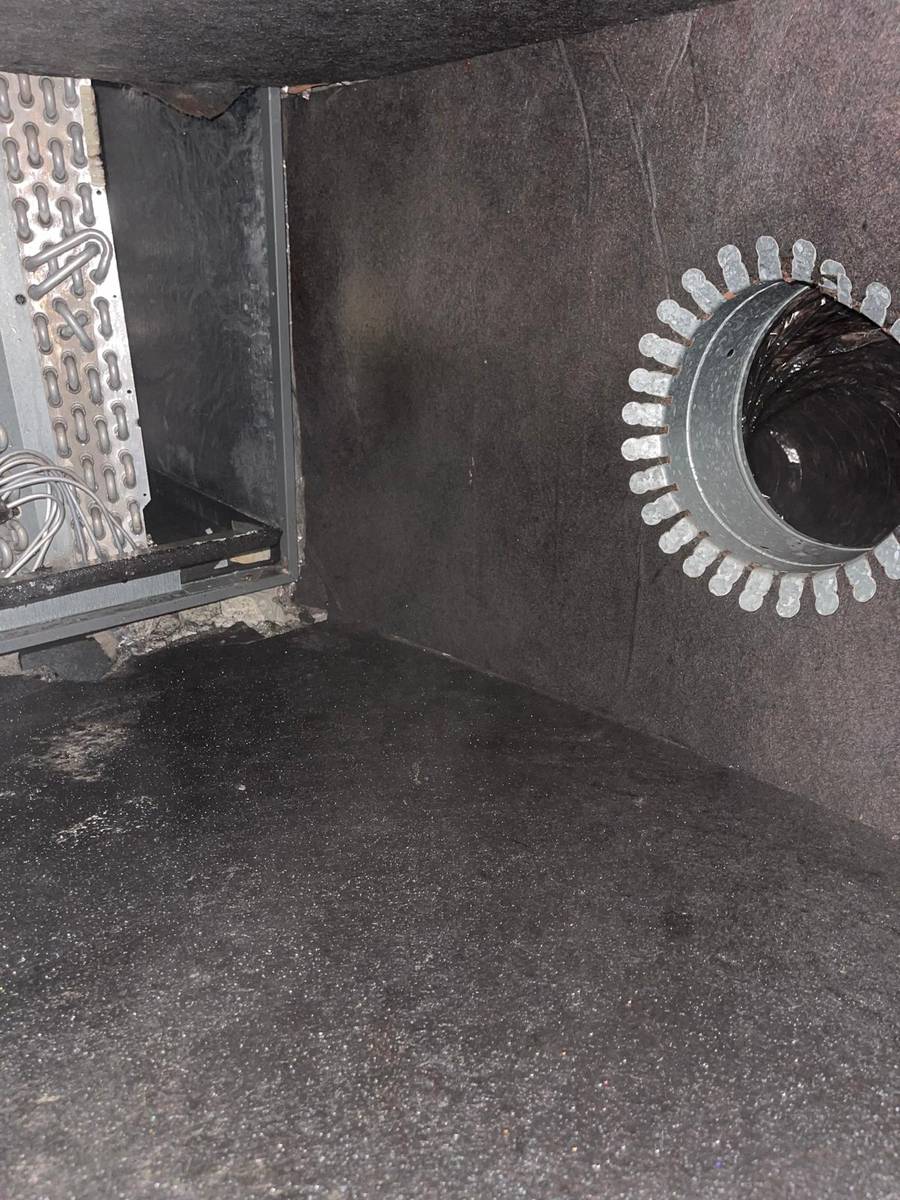
The floor next to the coil, where the white debris and staining were, is now clean.
Why Debris in the Plenum Matters
A piece of wood or brick in the plenum isn’t dangerous by itself. The problem is everything that comes with it. Loose debris breaks down over time, catches dust, and gives the airflow something to pick at. Droppings are a bigger concern. They mean something has been getting into the system, and the air passing over them goes straight into your rooms.
Even without pests, a dirty return side works against you. Dust that gets past or around the filter collects on the coil, which makes the AC work harder and can lower its efficiency.
If You Find Droppings Near Your AC
Droppings near an air handler call for a little more than a cleaning. Here’s what we tell homeowners:
- Don’t sweep or use a household vacuum on them. Both can put fine particles into the air. Leave cleanup to someone with HEPA equipment.
- Have a pest control company inspect the attic and seal entry points before or right after the ducts are cleaned, so the problem doesn’t come back.
- Replace the air filter once the system is cleaned, since the old one has been catching whatever was in the return.
- Check the return plenum and duct connections for gaps. Openings around the unit are a common way for pests and attic dust to get into the system.
Signs Your Air Handler Needs a Look
- The house gets dusty again a day or two after you clean
- You smell something musty or unpleasant when the AC turns on
- You hear scratching in the attic, or find droppings near the unit
- You’ve had a remodel, new AC equipment, or attic work done
- Nobody can remember when the ducts were last cleaned
Air Duct Cleaning in Southwest Houston
We clean air ducts in homes across southwest Houston, including 77085, 77096, 77035, 77045 and the surrounding area, and all over the Houston metro. We work on ductboard, flex duct and sheet metal systems, and we use the right method for each so nothing gets damaged.
If your house stays dusty no matter what you do, see how our air duct cleaning works or book online. You can also call us at (832) 699-0888 for a free estimate.