The air inside a Houston home is often two to five times more polluted than the air outside, and we spend roughly 90 percent of our time indoors. The combination of a sealed-up energy-efficient envelope, the constant AC cycling almost ten months out of the year, and Gulf Coast humidity that turns dust into food for mold spores means most homes have an indoor air problem they don’t know they have. The right air purifier or filter handles it. The wrong one is decoration.
We install, replace, and service whole-home and portable air purification systems across greater Houston. The questions below are the ones we get every week from homeowners trying to figure out what they actually need. Honest answers, no upselling.
Air filters versus air purifiers — what’s the difference?
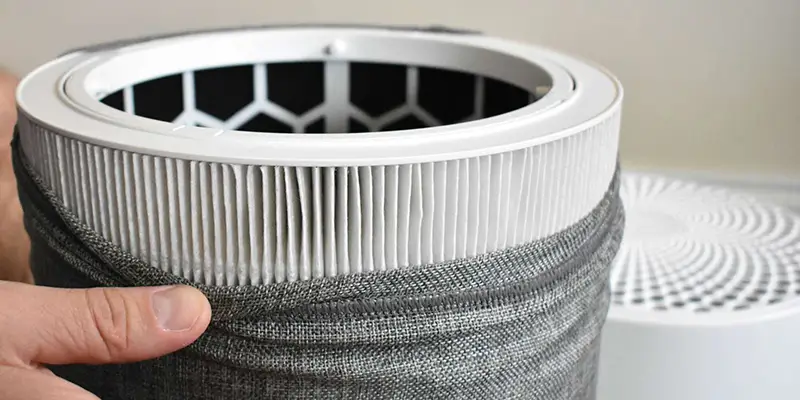
An air filter is a passive barrier. Air pushes through it, particles get caught in the material. The standard 1-inch fiberglass filter in your return register is an air filter. So is a high-end 4-inch pleated MERV 13 filter. Filters work on whatever air the HVAC system is moving — when the AC isn’t running, the filter isn’t working.
An air purifier is active. Most use a fan to pull air through their own filtration stages, which means they keep cleaning whether or not the AC is on. The better whole-home models add UV-C lamps that kill mold and bacteria, ionization to make small particles stick together so the filter can catch them, and activated carbon to scrub odors and VOCs.
For most Houston homes, the answer isn’t one or the other. It’s a high-MERV filter on the HVAC plus a whole-home purifier installed in the supply plenum. Together they handle 99 percent of what makes indoor air bad.
What MERV rating do I actually need in Houston?
MERV is a 1-to-16 scale measuring how small a particle the filter can catch. Higher number, smaller particles. The trade-off is airflow — a high-MERV filter restricts more air, and an HVAC system not designed for it ends up working harder, costing more on the energy bill, and stressing the blower motor.
For Houston homes built since 2000, MERV 11 to MERV 13 is the sweet spot. MERV 8 is the bare minimum — it’ll catch dust and pollen but not the mold spores and pet dander that drive most allergy and asthma symptoms. Anything above MERV 13 (the HEPA-grade range) usually requires HVAC modifications a residential system can’t handle without retrofit work.
The other thing nobody tells you: those 1-inch filters at the big box stores are wrong for a high-MERV. They clog so fast that even a MERV 11 will choke airflow within three weeks. If you want MERV 13 effectiveness, you need a 4- or 5-inch filter housing, which means a media cabinet retrofit. We do that work in a single visit for most central HVAC layouts.
Do whole-home air purifiers actually work, or is it marketing?
The good ones absolutely work. The cheap ones are noise machines. A real whole-home purifier installed in the supply plenum runs whenever the blower is moving air, treats every cubic foot before it reaches living spaces, and addresses what filters can’t — gases, odors, mold, and bacteria.
UV-C lamps in the air handler kill 99-plus percent of mold and bacteria flowing past, with the caveat that the lamp has to be the right wattage for your blower CFM and positioned correctly to actually dose passing air. Most factory-installed UV systems on entry-level HVAC units are undersized; we replace these regularly with properly-rated lamps that do the job.
The newer-generation systems — needlepoint bipolar ionization, photocatalytic oxidation, hydroxyl generators — are stronger but get oversold. Each has a real use case and real limitations. We’ll tell you straight whether the system being pitched matches your home’s actual problem or whether you’re paying for a feature you don’t need.
What about portable air purifiers and the necklace-style devices?
Portable HEPA purifiers (the kind you put in a bedroom or living room) are useful for single-room problems — allergies in the kid’s bedroom, smoke during wildfire season, a downstairs music room you want kept clean. Get one with a real HEPA filter (look for “True HEPA” on the box), an activated carbon stage, and a CADR rating that matches the room’s square footage. Brand names that consistently deliver: Coway, Levoit, Honeywell, IQAir.
The necklace-style ionizer pendants you see online are not air purifiers in any meaningful sense. The CADR is essentially zero. Several models have been flagged by the EPA for emitting ozone at concentrations above the FDA limit when worn close to the face. Skip them.
How often should I change filters in a Houston home?
Standard 1-inch HVAC filter: every 30 to 60 days during AC season (which is most of the year here). The Houston combination of pollen-heavy spring, summer pet hair, and bayou-area dust shortens filter life compared to drier climates.
4- or 5-inch media filter: every 6 to 12 months depending on rating and household traffic. Pet households and homes with allergy sufferers need shorter intervals.
UV-C lamps: every 12 months even if they’re still glowing. UV output drops 30-plus percent in the second year, after which the lamp is decoration.
Whole-home purifier internal filters: per the manufacturer’s schedule, usually 6 to 12 months. We log replacement dates with every service visit so you don’t have to track it.
What does a whole-home air purifier cost installed in Houston?
Entry-level UV-C system in an existing HVAC: $450 to $850 installed, depending on access and lamp size.
Mid-range whole-home electronic air cleaner with HEPA-grade filtration: $1,200 to $2,400 installed, including the media cabinet retrofit if you don’t already have one.
High-end multi-stage system (UV plus PCO plus carbon): $2,500 to $4,500 installed.
Quality portable HEPA units for individual rooms: $200 to $700 each, no installation needed.
Whichever route fits, we’ll quote a flat installed price up front — no add-ons, no “found this surprise” charges. Free in-home assessment for whole-home systems.
Have a Houston-area air quality question?
Call (832) 699-0888 any time, day or night. We’ll talk through what’s happening in your home, recommend a real solution, and quote a flat price before any work happens. Twenty-plus years of cleaning Houston ducts and installing purification systems — no commission-driven sales reps, no pressure tactics.
Frequently asked questions
What’s the difference between an air filter and an air purifier?
An air filter is a passive barrier that catches particles when air pushes through it. The standard 1-inch fiberglass filter in your return is a filter. An air purifier is active — it uses its own fan to pull air through filtration stages and keeps cleaning whether the AC is running or not. Better whole-home models add UV-C, ionization, and activated carbon to handle gases and biological contaminants that filters can’t.
What MERV rating do I need in a Houston home?
For Houston homes built since 2000, MERV 11 to MERV 13 is the sweet spot. MERV 8 is the bare minimum and won’t catch mold spores or pet dander. Above MERV 13 typically requires HVAC modifications. Note: 1-inch filters at retail clog so fast that even MERV 11 chokes airflow within 3 weeks — for true MERV 13 effectiveness, you need a 4 or 5-inch media filter housing.
Do whole-home air purifiers actually work?
The good ones absolutely work. UV-C lamps in the air handler kill 99-plus percent of mold and bacteria flowing past, when the lamp is properly sized for the blower CFM. Most factory-installed UV systems on entry-level HVAC units are undersized. Newer-generation systems (bipolar ionization, photocatalytic oxidation) work but get oversold — we tell you straight whether the pitch matches your actual problem.
Are necklace-style ionizer air purifiers worth it?
No. The CADR (clean air delivery rate) is essentially zero. Several necklace ionizer models have been flagged by the EPA for emitting ozone above the FDA safety limit when worn close to the face. They’re not air purifiers in any meaningful sense.
How often should I change my HVAC filters in Houston?
Standard 1-inch HVAC filter: every 30 to 60 days during AC season, which is most of the year here. 4- or 5-inch media filter: every 6 to 12 months depending on rating and household traffic. UV-C lamps: every 12 months even if still glowing — output drops 30-plus percent in year two. Pet households and allergy sufferers need shorter intervals.
What does a whole-home air purifier cost installed in Houston?
Entry-level UV-C system in existing HVAC: $450-$850. Mid-range whole-home electronic air cleaner with HEPA-grade filtration including media cabinet retrofit: $1,200-$2,400. High-end multi-stage system (UV plus PCO plus carbon): $2,500-$4,500. Quality portable HEPA units for individual rooms: $200-$700.
Not sure which setup fits your home? We can walk you through it — take a look at our UV light air purification systems, or start with a full air duct cleaning to clear out what’s already in the system.