The complaint usually starts the same way: a musty smell that shows up when the AC kicks on and fades once it has been running a while. In Houston, that pattern points at the HVAC system more often than not. Our climate hands ductwork everything growth needs — warm air, near-constant humidity, and condensation forming on coils and plenums ten months a year. We have been cleaning Houston duct systems since 2002, and suspected mold is one of the most common reasons the phone rings.
Why Houston Ductwork Grows Mold
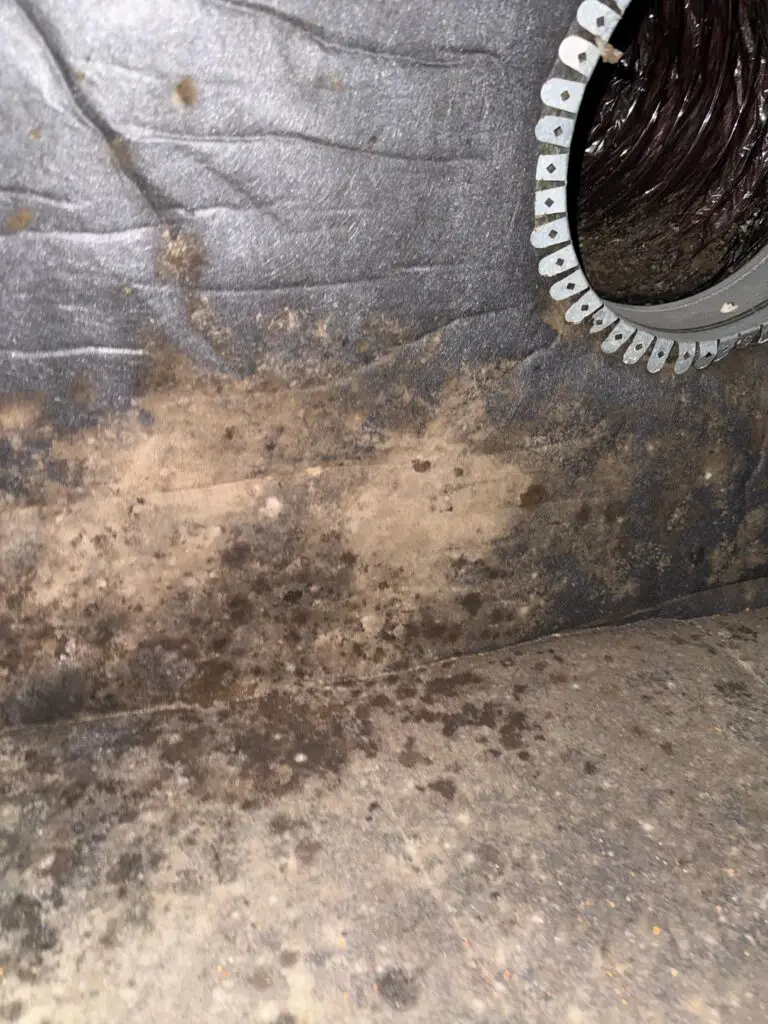
Three things come together inside an air handler: moisture, dust, and darkness. Condensation forms wherever cooled surfaces meet humid air — the evaporator coil, the plenum, the first few feet of supply duct. Dust settling on those damp surfaces becomes a food source. Fiberboard duct liners, common in Houston homes, hold dampness longer than sheet metal. And an oversized AC that short-cycles never runs long enough to wring the humidity out of the air, which keeps the whole system wetter than it should be.
Signs Worth Taking Seriously
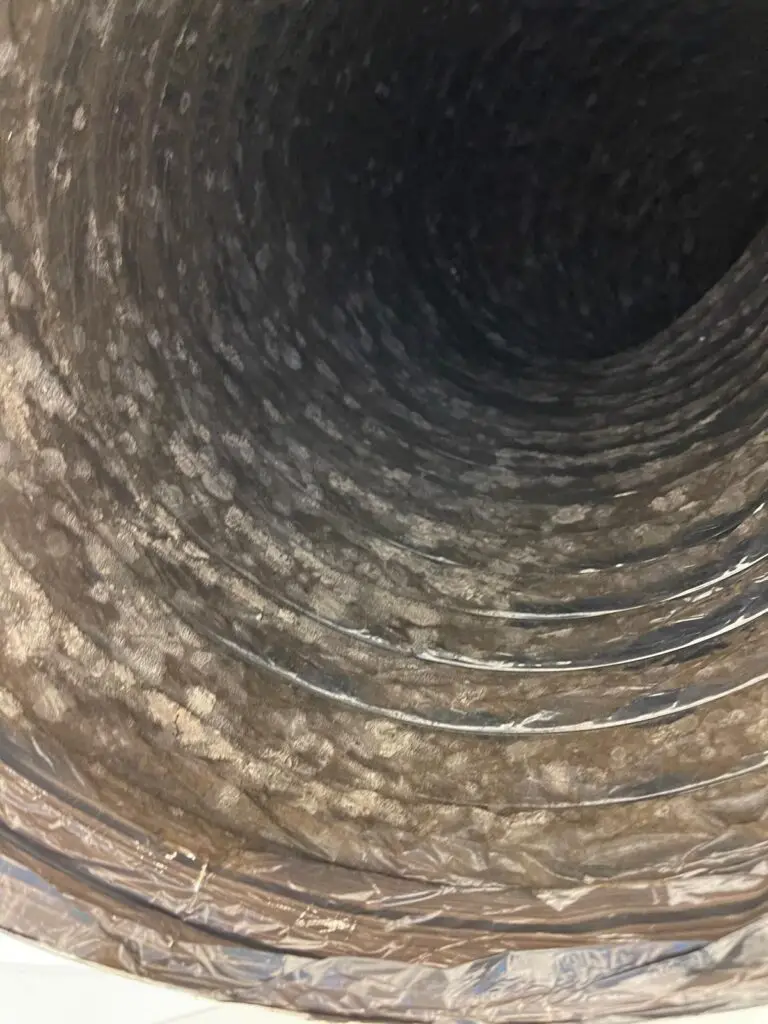
A musty odor tied to the system running. Dark spotting around supply registers or on the ceiling near vents. Allergy symptoms that flare indoors with the AC on. A recent roof leak, plumbing leak, or flooding event followed by any of the above. None of these proves mold on its own — but together they earn a look inside the system.
An Honest Word About Dark Spots
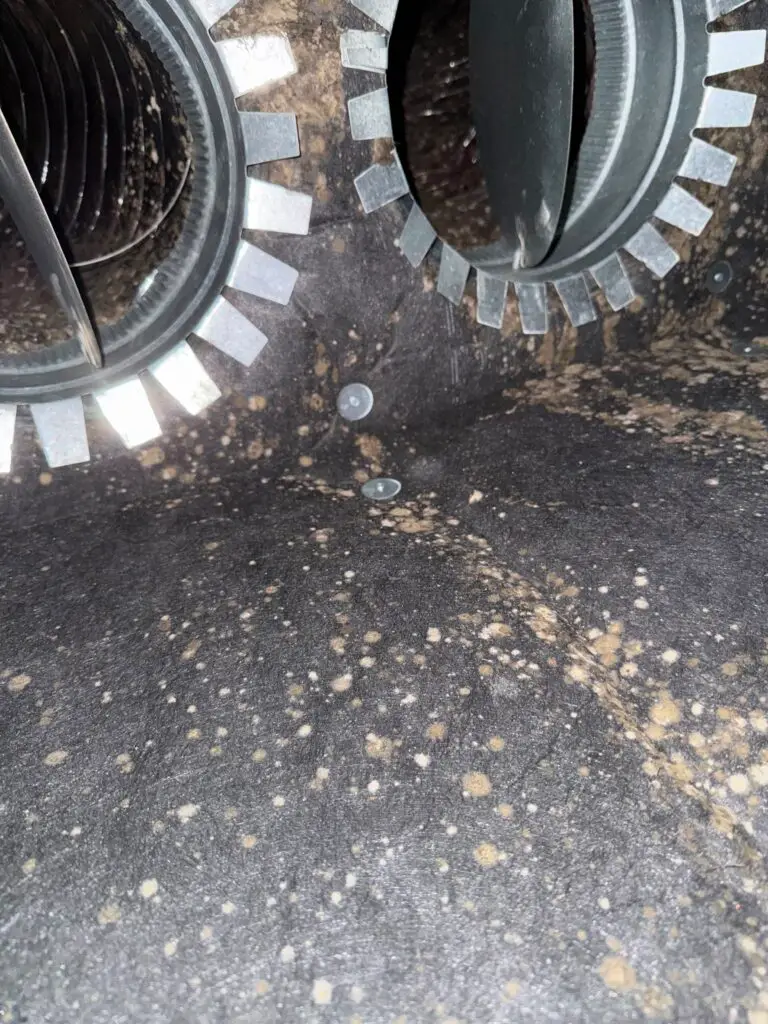
Not every dark patch in a duct is mold. Ordinary dust buildup and spotting can look nearly identical, and plenty of companies profit from calling everything mold and quoting accordingly. Our inspection is straightforward: we look, we photograph what we find, and we tell you what it looks like. When confirmation matters — for a real estate transaction, an insurance claim, or peace of mind — lab testing settles it before anyone quotes remediation work.
What the Work Involves
The core of the job is a full source-removal duct cleaning: the system goes under negative pressure and the buildup on the duct walls — whatever it turns out to be — gets pulled out of the home rather than stirred into it. Treated surfaces are sanitized with products applied per their label. Just as important, we look for the moisture cause: a sweating coil, a clogged condensate line, duct sections that need attention. Killing growth without fixing the moisture is a temporary fix, and we say so.
Keeping It From Coming Back
For systems with a history of moisture problems, UV light systems installed at the coil keep the wettest part of the system inhospitable to growth around the clock. And when growth extends beyond the HVAC system into walls, ceilings, or flooring, that is a different scope of work — our mold remediation page covers what that involves.
Frequently Asked Questions
How does mold get into air ducts?
Moisture plus organic dust. Condensation on coils and plenums, Houston humidity, and fiberboard liners that hold dampness — dust settling on those surfaces gives growth something to feed on.
Is mold in the ductwork dangerous?
It can aggravate allergies and respiratory symptoms in sensitive people, because the system distributes air from the ducts through the entire home. The EPA recommends addressing both the growth and the moisture source behind it.
Is every dark spot mold?
No. Dust buildup and spotting can look nearly identical. Inspection narrows it down; lab testing confirms it. Anyone who quotes mold work without looking is guessing at your expense.
Can I just spray the vents with a cleaner?
Sprays reach the register, not the duct run behind it, and they ignore the moisture that caused the problem. Growth inside ductwork needs source-removal cleaning with proper equipment.
Will it come back after cleaning?
Not if the moisture cause is fixed. If condensation or humidity problems continue, it can — which is why finding the cause is part of the job, and why UV systems at the coil are a common prevention step here.
Get an Honest Look at Your System
Call (832) 699-0888. We inspect, photograph what we find, tell you plainly whether it looks like a cleaning job or something more — and put the price in writing before any work starts.