

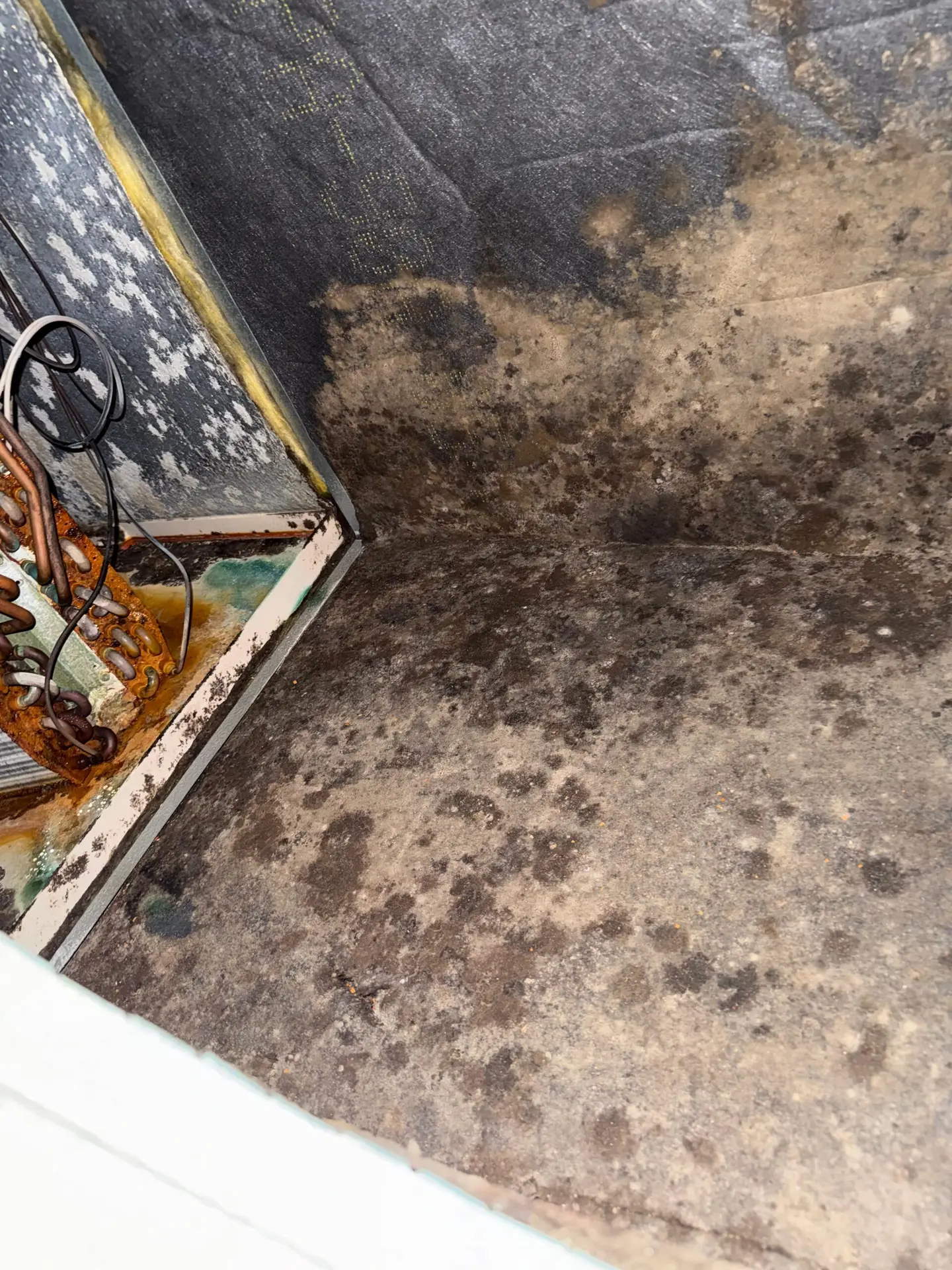
We got called out to a home in Magnolia, TX last week. The homeowner had been dealing with a musty smell every time the AC kicked on, allergy symptoms that kept getting worse, and electric bills that had crept up about $80 a month over the past year without anything else in the house changing.
When we opened the air handler, this is what we found.

That’s not surface dust. The dark coating across the plenum floor and walls is active mold growth — the warm, humid, dark interior of an HVAC system in the Houston metro is a near-perfect environment for it, especially when the coil starts having issues. And look closely at the copper coil bends on the left side. That green-blue residue is verdigris from a slow refrigerant leak that had been corroding the coil for months. The combination is what was driving the smell, the symptoms, and the climbing power bills. The system was working twice as hard to push air through a partially clogged and biologically active environment.
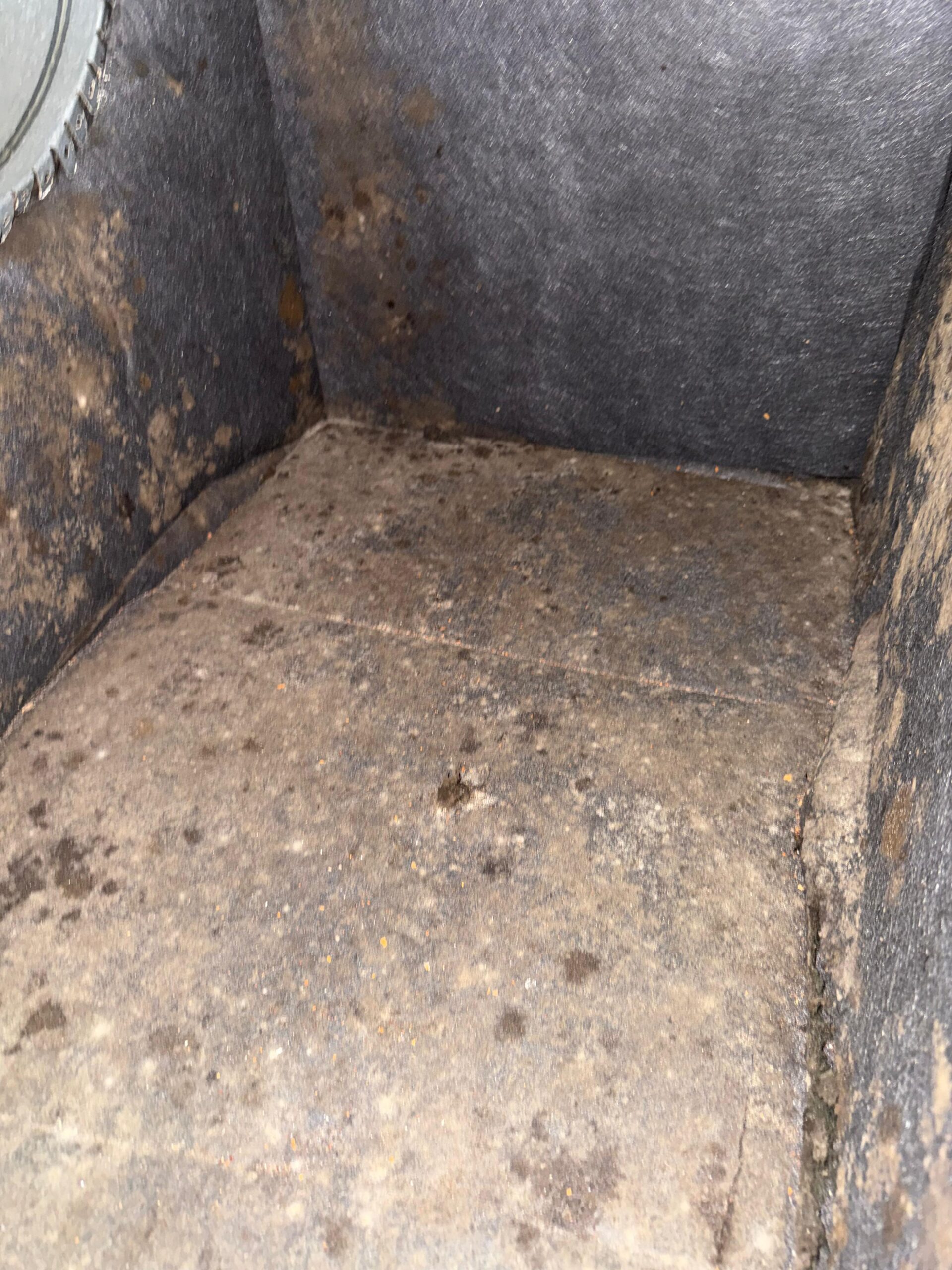
The supply plenum was no better. Years of accumulated dust, dander, and microbial buildup coating every interior surface.

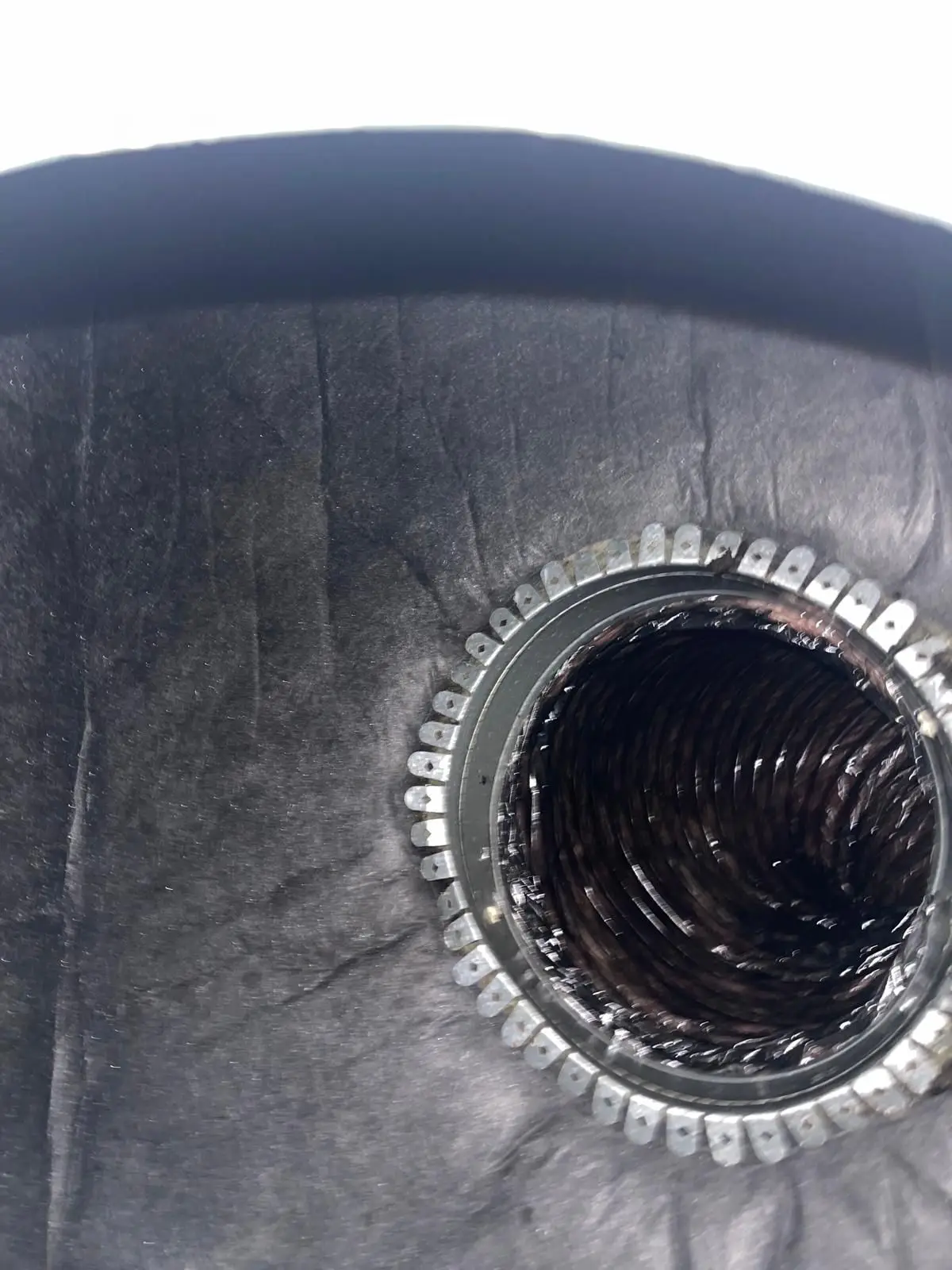
Looking down a takeoff into the flex duct that feeds one of the bedrooms — that black coating goes the full length of the run. Every breath the family was taking in that room was pulled across that surface first.
How we approached the job
This job took two technicians most of a Tuesday. The cleaning side of it was straightforward — we shut down the system, sealed off return vents, removed every supply register, and ran a brush-and-vacuum process through the full duct network with a truck-mounted negative air machine pulling debris back to our truck.
The mold and coil situation needed more than that. The mold remediation was hand-treatment with an EPA-registered antimicrobial after the loose debris was vacuumed out. The corroded coil is on the homeowner’s punch list now — we documented it with photos, walked them through what we saw, and gave them an honest recommendation: this coil has another 12-18 months in it, maybe less if the leak accelerates. Not our job to replace, but our job to flag.
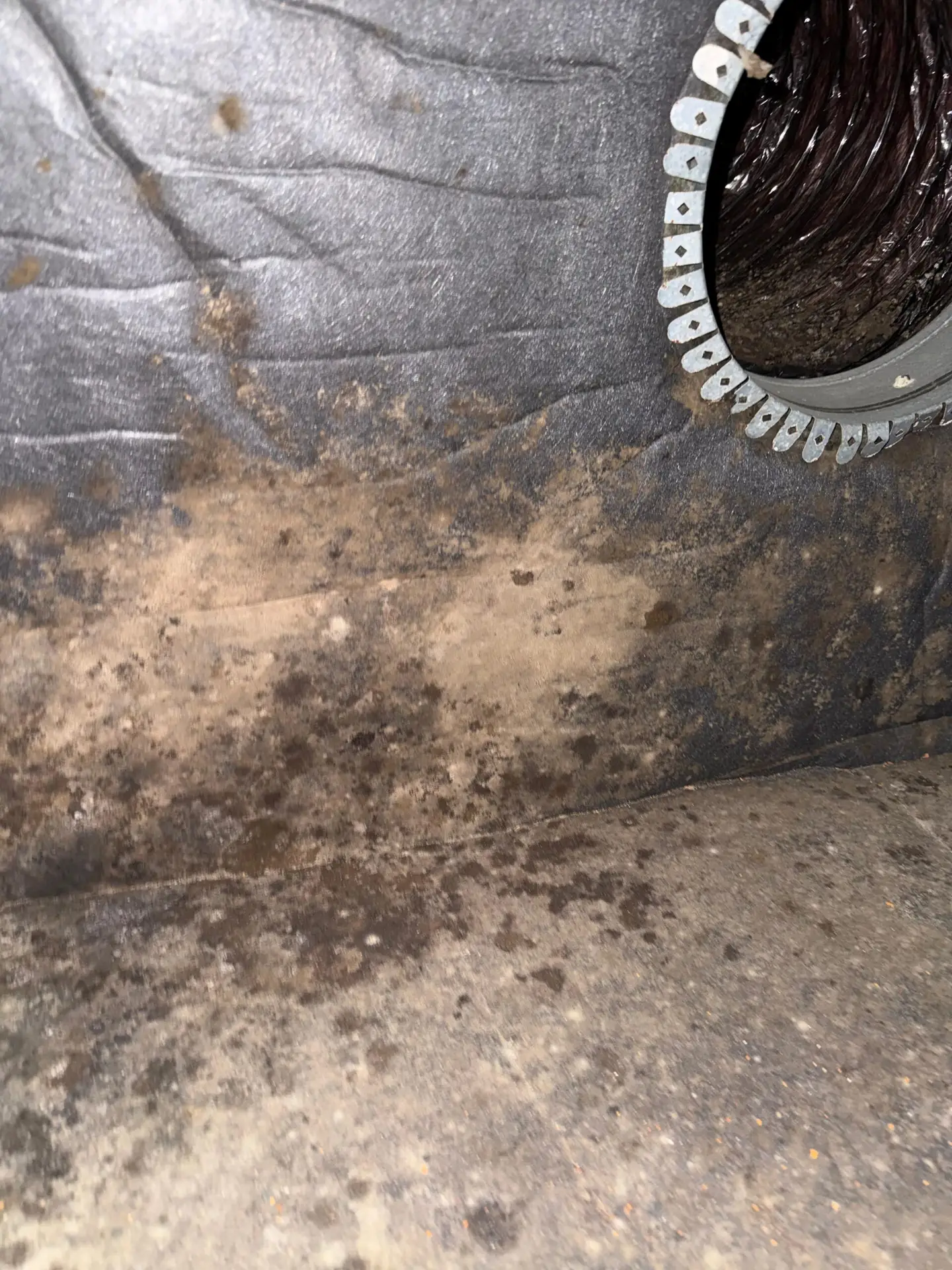
Mid-process shot showing the contrast between a cleaned section and one still being worked.
The after
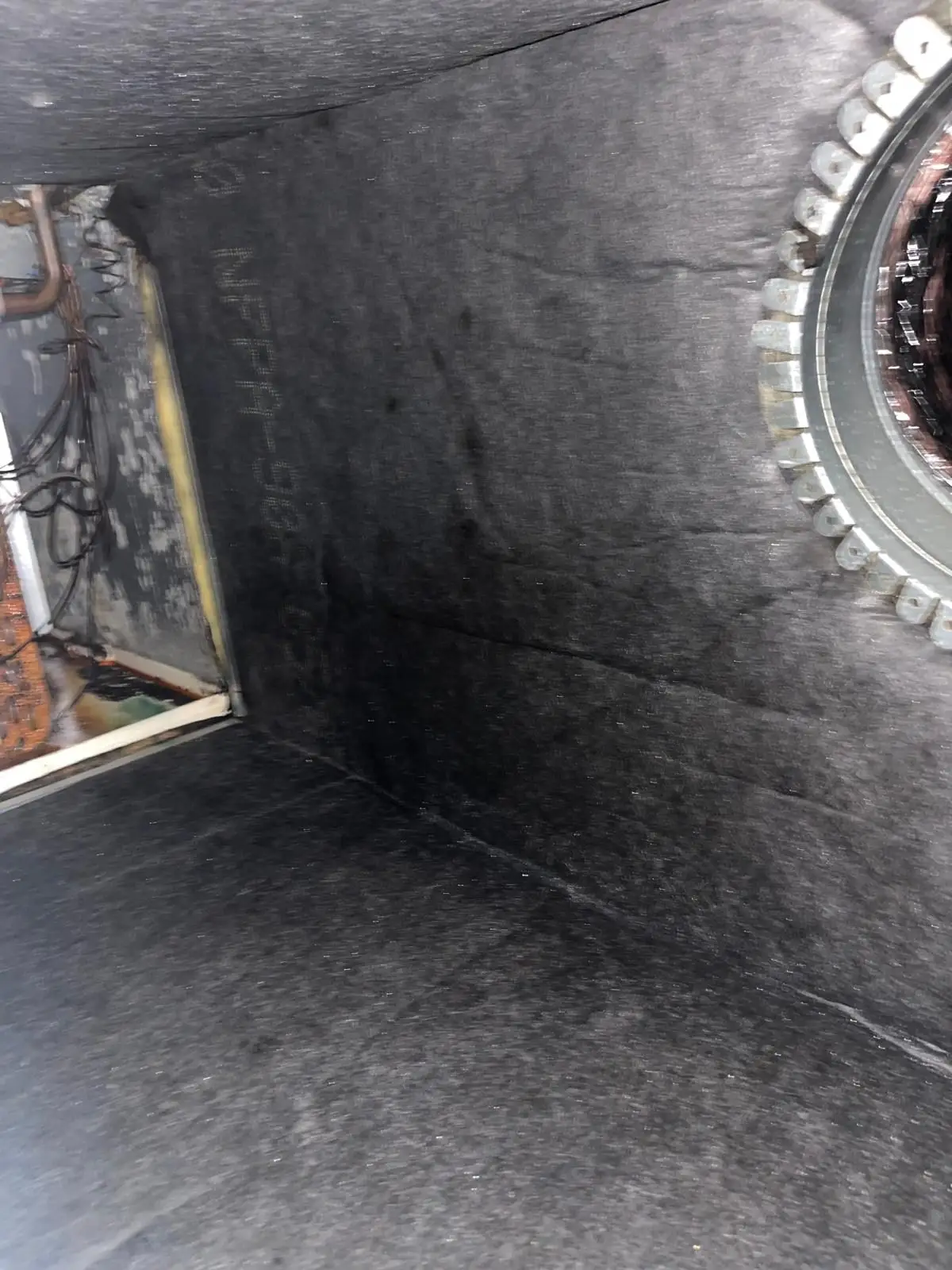
Same plenum, same angle, after the full process. No more mold, no more dust coating. The walls are back to their original surface.

The takeoff connections were brushed and vacuumed individually.

Detail of the takeoff after cleaning — same connection, transformed.
What this means if you’re in Magnolia, TX or the surrounding area
Two things worth knowing if you live in Magnolia, Tomball, Spring, The Woodlands, or anywhere in the northwest Houston metro.
First, our humidity is a year-round mold accelerator. Homes in the inner loop have the same problem, but newer construction out toward Magnolia and Montgomery County tends to have larger HVAC systems with more flex duct, which means more interior surface area for buildup. The job above was a 4-ton system with 12 supply runs. That’s a lot of interior duct surface, and most of these systems have never been cleaned since the day they were installed.
Second, the symptoms creep up slowly. Nobody wakes up to mold in their ducts overnight. It builds over years. By the time you notice the smell or the bills, the problem has usually been growing for a while. Annual visual inspection is cheap. A full cleaning every 3-5 years for most homes, or every 2-3 if you have pets, allergies, or recent construction nearby.
If mold keeps coming back after a cleaning, a UV-C light system mounted at the coil is worth a look — the light knocks down spores before they can re-establish between visits.
If your dryer is taking longer, your AC smells musty when it first kicks on, or your bedrooms are running warmer than the rest of the house — those are the early signs. Don’t wait until you have a story like the one above.
We handle air duct cleaning across Magnolia, TX (77354 and 77355) and the greater northwest Houston metro. Free estimates, BBB A+ rated, 24 years in business, 600+ Google reviews.
📞 (832) 699-0888 🌐 extremeairduct.com